
Introduction – The Color Gap You’ve Seen but Couldn’t Explain
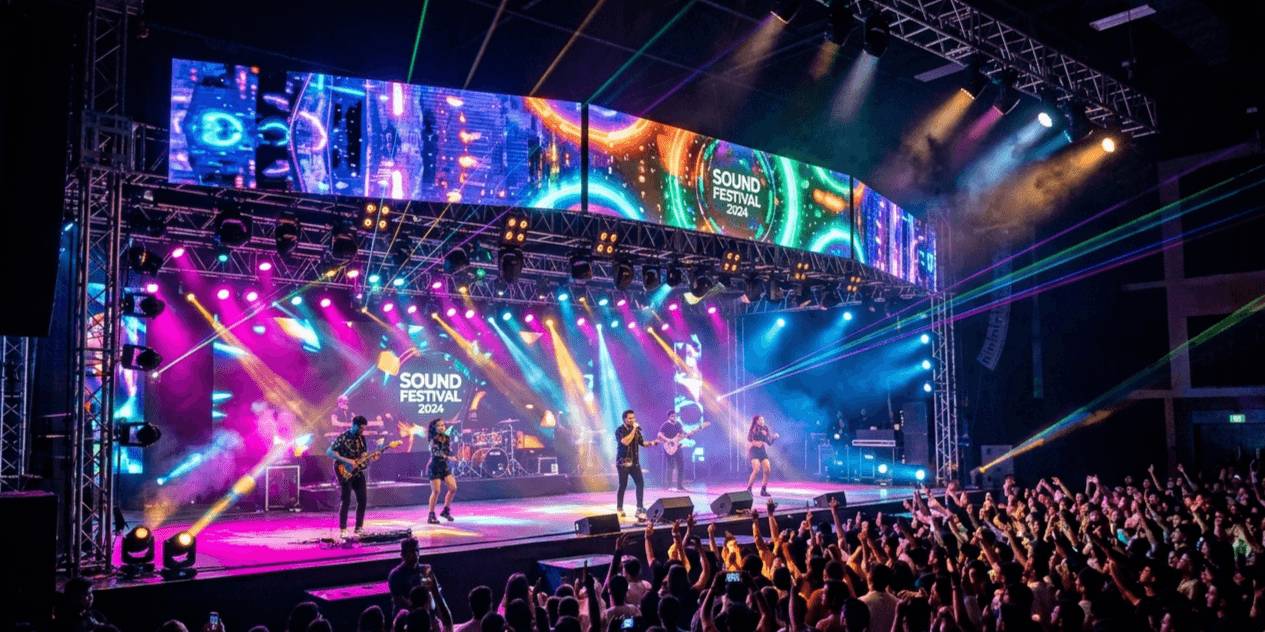
You have probably stood in front of two festival stages with similar rig sizes and similar fixture counts, yet one looked noticeably richer, deeper, and more alive than the other. The difference was not simply the number of lights. It was how those lights mixed color.
For years, the industry followed a fairly clear divide: high-end moving heads relied on CMY subtractive mixing, while more affordable LED fixtures used RGB or RGBW. That line has now blurred. Today, lighting buyers are faced with a growing list of color systems — CMY, RGBL, RGBALC, and even virtual CMY on LED engines. Each promises better color, but each brings different trade-offs in brightness efficiency, dimming smoothness, white quality, cost, and programming workflow.
If you are a rental house manager, a church technical director, or a live event supplier in 2026, marketing language is not enough. What matters is what actually looks different on stage, which system creates fewer complaints and callbacks, and which one gives programmers a smoother experience in real-world use.
This guide breaks down CMY, RGBL, and RGBALC not as a technical lesson, but as a practical decision framework. We will compare white quality, color saturation, low-end dimming behavior, brightness efficiency, and real-world programming experience. Then we will compare how each system behaves in the areas that matter most on stage, from white quality and pastel control to dimming behavior and brightness efficiency.
Let’s start with the oldest reference point — CMY — and see where each system actually wins on stage.

First, Understand How Each System Creates Color
Before comparing which system looks richer on stage, it helps to understand what each one is actually doing.
CMY, RGBW, RGBL, and RGBALC can all produce strong show color, but they do not create that color in the same way. That difference affects how a fixture behaves in fades, whites, warm tones, pastels, and low-intensity looks. Subtractive systems start with white light and remove wavelengths with filters, while additive LED systems build color by combining multiple emitters.
CMY – Subtractive Mixing from a White Source
CMY works by first creating a bright white beam, then passing that light through cyan, magenta, and yellow filters. Each filter absorbs part of the spectrum, so the final color is produced by subtraction rather than addition.
In stage fixtures, this is usually done with an internal dichroic filter system.
What makes CMY important is not just the theory — it is the way the color behaves.
In real stage use, the value of CMY comes from its color behavior. Because it moves from white light into color in a continuous way, the result often feels smoother and more natural.
That is one reason CMY has long been associated with high-end touring and theatrical lighting.
It is especially strong in areas such as:
- smoother fades
- more natural skin tones
- more refined soft-color mixing
The trade-off is efficiency. Every time color is created through filtering, part of the light output is lost. So CMY is less efficient than additive LED systems in terms of brightness. That becomes more noticeable when maximum output is the priority, but matters less when the goal is higher color quality.
RGB / RGBW – Basic Additive Mixing (and Where It Starts to Fall Short)
RGB works in the opposite way. Instead of starting with white light and filtering it, it creates color by combining red, green, and blue LED emitters. RGBW adds a white LED to improve white-light performance and boost lighter tones.
Its biggest advantage is efficiency.
Additive systems are known for being:
- direct in output
- energy-efficient
- bold and immediate in color delivery
That is why RGB and RGBW became so common in LED wash fixtures.
The limitation starts to show when the look needs more nuance.
As soon as the visual goal shifts toward things like:
- natural skin tones
- cleaner whites
- softer pastel colors
RGB and RGBW can start to feel less refined.
This is where many users begin to notice the difference between lighting that feels colorful and lighting that feels richer and more refined.
There is nothing wrong with RGB or RGBW. It is simply a more basic additive system. Once the visual standard moves from “it has color” to “it has depth and polish,” its limitations become more visible.
RGBL – Using Lime to Fill the Green-Yellow Gap
RGBL is still an additive LED system, but it replaces the traditional white channel with a lime emitter.
What problem does it solve?
One of the biggest weaknesses of RGB and RGBW is the spectral gap in the yellow-green region. That gap can make certain mixed colors feel unnatural, incomplete, or slightly dirty.
The lime channel helps fill that space.
On stage, RGBL typically improves:
- white-light cleanliness
- mixed-color consistency
- skin-tone naturalness
- warm and pastel stability
In practical terms, RGBL often feels like a more complete version of RGBW.
It does not change the additive nature of LED color mixing, but it makes the result feel more unified and less like separate colors being blended together.
RGBALC – A Six-Color Additive System with Much Broader Spectral Coverage
RGBALC expands the LED engine to six separate color channels:
- Red
- Green
- Blue
- Amber
- Lime
- Cyan
What does each added channel do?
- Amber helps improve warm whites and skin tones
- Lime improves the yellow-green region and white-light quality
- Cyan expands the cooler side of the spectrum, especially blues, cyans, and some violet-related mixes
The real goal is not “more color” — it is more complete spectral coverage.
That broader coverage allows RGBALC systems to produce:
- cleaner whites
- more natural warm tones and skin tones
- more refined mixed colors
- a wider overall color gamut
That is why product descriptions in this category often talk about smoother color mixing, virtual color-wheel effects, and wider application flexibility. All of that points back to the same idea: to bring LED color performance closer to a more refined, full-spectrum result.
The trade-offs are real.
RGBALC also brings:
- higher cost
- more control complexity
- greater dependence on good calibration and processing
A Simple Way to Think About It
- CMY shapes color by subtracting wavelengths from white light.
- RGB systems build color by adding different LED emitters together.
- RGBL strengthens RGBW by filling a major spectral weakness.
- RGBALC pushes additive mixing toward a broader, more refined color range.
That is exactly why these systems do not feel the same once they are on stage. In the next section, we will compare them side by side in white quality, saturation, dimming, and real-world programming.
Side-by-Side Comparison: What Actually Changes on Stage
Now that you understand how each system works under the hood, the real question is: what difference does it actually make on stage?
This is where the comparison becomes practical. The point is not just to know which system sounds more advanced, but to understand what actually changes in the way a show looks, how a programmer works, and how the audience experiences the result.
In this section, we will compare CMY, RGBW, RGBL, and RGBALC across five areas that matter in real use:
- white quality and skin tones
- saturated color punch
- pastel and soft-color accuracy
- low-end dimming behavior
- brightness efficiency
Each of these matters differently depending on the application. A festival main stage may care more about saturated punch and usable output. A church livestream or theatre production may care more about white quality, skin tones, and smooth dimming.
1. White Quality and Skin Tones
This is often one of the first differences people notice.
If a fixture is being used on faces, scenic surfaces, or camera-facing environments, white quality matters immediately. A system may be able to produce white, but that does not always mean the result will look clean, flattering, or natural.
| System | Performance |
|---|---|
| CMY | Excellent. Because it starts with a strong white source, whites tend to stay clean and stable across different intensities. Skin tones usually look natural, and color temperature changes are often smoother. |
| RGBW | Fair to good. White-light performance is improved over basic RGB, but the result can still feel cool, slightly green, or slightly magenta depending on the fixture design and calibration. Skin tones may look less natural in more demanding applications. |
| RGBL | Good to very good. The lime channel helps fill the yellow-green gap, which usually improves white cleanliness and makes skin tones look more natural than standard RGBW. |
| RGBALC | Excellent. With amber, lime, and cyan, this system can deliver some of the most refined whites and skin tones available in additive LED fixtures, especially in higher-end designs. |
Bottom line:
If faces matter — in church, TV, theatre, livestream, or corporate work — CMY and RGBALC usually lead. RGBL is a strong middle-ground option. RGBW can still work well, but tends to show its limits sooner in more color-sensitive environments.
2. Saturated Color Punch
Not every system wins in the same way.
Some systems feel strongest in bold, high-energy color. Others feel better in softer, more refined looks.
| System | Performance |
|---|---|
| CMY | Good. Saturated colors can look rich and refined, but because the system creates color by filtering white light, the most intense reds, blues, and greens may feel slightly less forceful than dedicated additive LED color at full output. |
| RGBW | Very good. Additive mixing from dedicated red, green, and blue emitters is naturally strong in bold, punchy color. This remains one of RGBW’s biggest strengths. |
| RGBL | Very good. RGBL keeps much of RGBW’s saturated punch, while often giving the overall color engine a more balanced feel. |
| RGBALC | Excellent. With broader spectral coverage, RGBALC can produce very strong saturated looks while also extending into areas where simpler systems begin to struggle. |
Bottom line:
For strong saturated color, additive LED systems usually have the advantage. RGBW still performs well in many festival and club applications. RGBL and RGBALC often feel more complete, especially once you move beyond the most obvious colors.
3. Pastel and Soft-Color Accuracy
This is where richer rigs often separate themselves from ordinary ones.
Soft colors are much harder to do well than bold colors. Lavender, peach, pale amber, warm pink, and other subtle mixes quickly expose the strengths and weaknesses of a color system.
| System | Performance |
|---|---|
| CMY | Excellent. Pastels tend to look smooth, natural, and refined. The transition from white into soft color usually feels more continuous and less synthetic. |
| RGBW | Fair. Pastels can work, but they are more likely to feel uneven, undersaturated, or slightly dirty depending on the fixture. |
| RGBL | Good to very good. The lime channel helps softer colors feel more stable and more natural. It is a clear improvement over standard RGBW in this area. |
| RGBALC | Excellent. The added amber, lime, and cyan channels give much more control over subtle mixed colors, making pastels feel more complete and more polished. |
Bottom line:
If your show depends on soft, atmospheric, or elegant color, CMY and RGBALC are usually the strongest choices. RGBL performs well for many mid-range applications. RGBW is workable, but is generally the least refined in this category.
4. Low-End Dimming Behavior
This is often overlooked, but it is one of the clearest places where systems begin to separate.
At full intensity, many fixtures can look strong. The real difference often shows up during slow fades, dark scenes, blackouts, and low-intensity atmospheres.
| System | Performance |
|---|---|
| CMY | Excellent. Dimming tends to stay smooth and visually stable because the white source remains consistent while color is shaped through filtering. |
| RGBW | Fair. At very low intensities, especially below the bottom end of the dimming curve, some fixtures are more likely to show color drift or uneven behavior. Whites can start to lean green or magenta, and darker looks may feel less clean. |
| RGBL | Good. RGBL often handles the low end better than RGBW, though the result still depends heavily on the fixture’s dimming curves, drivers, and processing quality. |
| RGBALC | Very good to excellent. High-end RGBALC systems can perform very well at low intensity, but the result still depends on how well the fixture is calibrated and controlled. |
Bottom line:
For very slow fades and highly sensitive low-light work, CMY still sets a very high standard. RGBL and RGBALC can perform very well, especially in better-designed fixtures. RGBW is usually the most likely to show its limitations first.
5. Brightness Efficiency
Not all systems use light in the same way.
This is one of the clearest differences between subtractive and additive color mixing.
| System | Performance |
|---|---|
| CMY | Low to medium. Because filters remove light from a white source, output drops as color becomes deeper. In strong saturated colors, the loss can be significant. |
| RGBW | High. Additive systems create color directly, so they are usually very efficient in terms of visible output. |
| RGBL | High. RGBL often improves usable output compared with standard RGBW designs, especially in white and mixed-color applications. |
| RGBALC | Medium to high. RGBALC can be very competitive in output, but it balances more channels and more complexity, so its efficiency depends strongly on fixture design. |
A practical rule of thumb is that CMY may lose roughly 50–70% of its white output in very deep saturated colors. That can matter when raw intensity is critical.
Bottom line:
If raw output is the top priority, additive LED systems usually have the efficiency advantage. But if the goal is richer color behavior, efficiency alone does not decide the winner.
Quick Reference Table
| Category | CMY | RGBW | RGBL | RGBALC |
|---|---|---|---|---|
| White & skin tones | Excellent | Fair to Good | Good to Very Good | Excellent |
| Saturated punch | Good | Very Good | Very Good | Excellent |
| Pastel accuracy | Excellent | Fair | Good to Very Good | Excellent |
| Low-end dimming | Excellent | Fair | Good | Very Good to Excellent |
| Brightness efficiency | Low to Medium | High | High | Medium to High |
What This Means for Your Next Purchase
Understanding why these systems look different is only the first step. The next question is more practical: which one actually makes sense for your rig, your team, and your budget? In Part 2, we’ll break that down by buyer type, workflow, and real-world testing.
If you found this breakdown useful, subscribe to our https://betopperdj.com/ — Part 2 drops next week, and you won’t want to miss the hands‑on checklist.


Hinterlasse einen Kommentar
Alle Kommentare werden vor der Veröffentlichung geprüft.
Diese Website ist durch hCaptcha geschützt und es gelten die allgemeinen Geschäftsbedingungen und Datenschutzbestimmungen von hCaptcha.