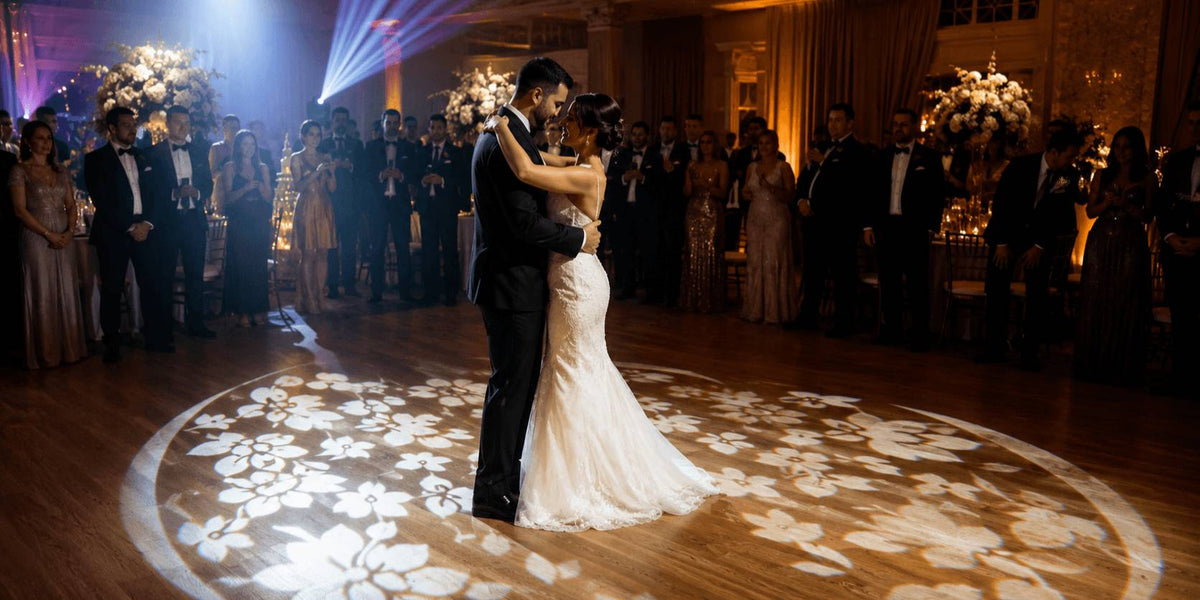
Gobo effects are one of the easiest ways to make a small lighting setup feel more designed.
For DJs, bars, lounges, private parties and small event spaces, gobos can add texture, identity, movement and visual focus without requiring a large stage production. Used well, they can make a plain wall feel intentional, give a DJ booth more presence, add movement to a dance floor, or create a themed look for a special event.
This guide focuses on practical ways to use gobo effects inside a real event lighting setup. We’ll look at where gobos work best, when to use static or rotating patterns, how to combine them with wash lights, beams, haze and color, and which common mistakes can make a small setup look messy instead of professional.

Use Gobos as a Visual Layer, Not the Whole Lighting Design
A strong gobo look works best when it supports the rest of the lighting setup.
For example, a rotating gobo on a wall can make a bar feel more active. A soft pattern behind the DJ booth can make the performance area feel more complete. A clear static gobo can mark a special moment, brand, event name or visual theme.
But gobos should not replace the basics.
If the room has no color wash, the gobo may feel isolated. If the dance floor has no movement or beam energy, the pattern may look flat. If every light is running a different gobo all night, the space can quickly feel messy.
Think of gobos as the “detail layer.”
A balanced small event lighting scene might look like this:
| Layer | Purpose |
|---|---|
| Wash color | Builds the base atmosphere |
| Gobo effect | Adds texture or identity |
| Beam / moving head | Adds energy and motion |
| Strobe / matrix effect | Creates peak impact |
| DMX scene control | Keeps everything organized |
When all layers work together, the space feels more intentional. When gobos are used without control, they can easily become visual noise.
Wall and Backdrop Looks for Bars and DJ Booths
Walls and backdrops are usually the safest places to use gobo effects.
For bars, lounges and small venues, wall patterns can help turn a simple room into a designed environment. A plain back wall can become a textured background. A brick wall, curtain, stage backdrop or DJ booth wall can become part of the lighting look.
Good wall and backdrop ideas include:
- Geometric textures
- Abstract patterns
- Repeating brand-style icons
- Soft floral or organic shapes
- Rotating dots or broken-up patterns
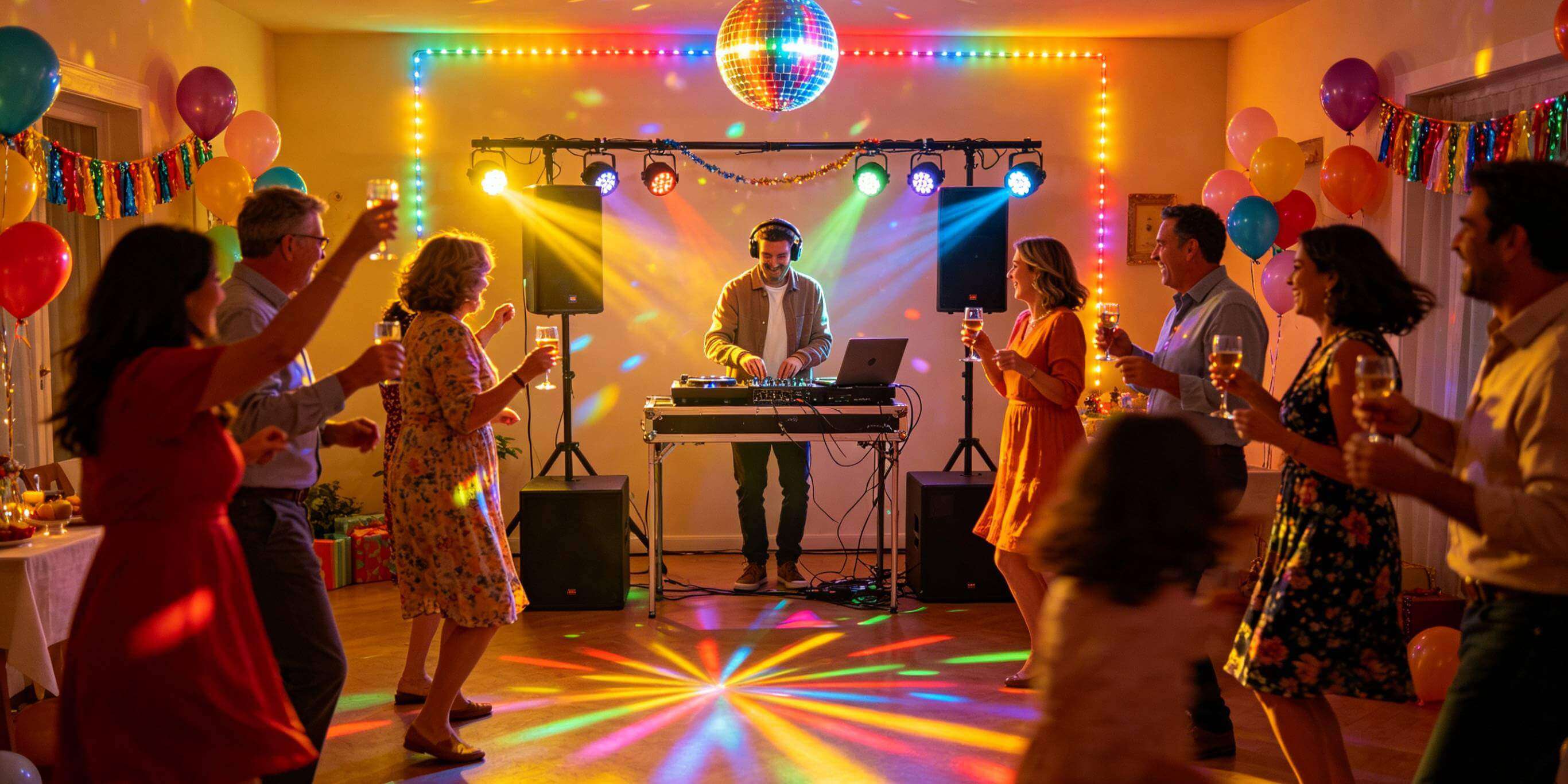
- Slow background movement behind the DJ
- Accent patterns on side walls
For DJ booths, gobos are especially useful because they help define the booth as the visual center. Instead of the DJ table disappearing into a dark corner, the wall behind it can carry a controlled pattern, color or logo-style look.
Wall gobos also have one practical advantage: they are less likely to be blocked by guests. Dance floor gobos can disappear once people start moving. Wall and backdrop looks usually stay visible throughout the event.
Dance Floor Gobos: Use Them for Moments, Not All Night
Dance floor gobos can look great, but they work best when used at the right moment.
They are useful for:
- First dance
- Grand entrance
- DJ intro
- Party drop
- VIP moment
- Themed dance floor
- Photo or video moment
The main thing to remember is that the dance floor is not an empty screen. Once guests start dancing, the pattern will be broken up by movement, shoes, shadows and bodies.
That is not always a problem. For high-energy events, broken-up gobo patterns can actually add movement and texture. But for logos, names or clean designs, the floor is not always the best choice unless the moment is controlled.
For example, a static monogram or event mark may work well during an entrance or first dance before the floor fills up. A rotating abstract pattern may work better later in the night when the goal is energy, not perfect clarity.
Use dance floor gobos as a moment effect, not as the only look for the entire event.
Static vs Rotating Gobos: Choose Based on the Scene
Different gobo styles work for different moments.
| Gobo Style | Best Use |
|---|---|
| Static gobo | Logo, monogram, event name, clean pattern |
| Slow rotating gobo | Lounge, cocktail hour, bar atmosphere |
| Faster rotating gobo | Dance floor energy, party moments, club-style looks |
| Gobo + prism | Wider pattern spread and stronger visual impact |
| Gobo + color wheel | Mood changes, themed colors, scene variation |
Static gobos are best when the design needs to be recognized. This includes names, logos, initials, symbols or simple event graphics.
Slow rotating gobos are better for atmosphere. They work well in bars, lounges, background walls and cocktail-style events where the goal is movement without distraction.
Faster rotating gobos are better for party sections, DJ drops, dance floors and high-energy moments.
The one rule: do not make text or logos rotate too fast. If the audience cannot read it, the effect loses its purpose.
Combine Gobos With Color, Beam and Haze
Gobos become more interesting when they are combined with other effects.
A gobo by itself can look good, but a gobo with the right color, movement and background support can become part of a complete scene.
Useful combinations include:
- Gobo + color wheel for mood changes and themed looks
- Gobo + prism for wider pattern spread
- Gobo + beam for stronger aerial energy
- Gobo + haze when you want the beam path to become visible
- Gobo + wash background to make the wall or booth area feel more complete
For example, a warm gobo pattern on a back wall with soft amber wash can work well for weddings or private events. A blue or purple rotating gobo with beam movement can work better for a bar or DJ party. A gobo with prism can create a larger, more dynamic pattern for peak moments.
The important point is control. If the wash light, beam light and gobo effect are all moving randomly at the same time, the scene may look busy. If each layer has a clear job, the result looks designed.
Match Gobo Looks to the Event Type
The same gobo effect will not fit every event. A bar night, wedding, school dance and corporate event all need different visual energy.
| Event Type | Gobo Effect Idea |
|---|---|
| Wedding / private event | Monogram, soft floral pattern, slow rotation |
| Bar night | Geometric texture, logo-style pattern, ceiling or wall movement |
| DJ party | Abstract gobos, rotating patterns, prism looks |
| Corporate event | Simple logo, brand-style pattern, clean static look |
| School dance | Stars, mascot-style icon, dynamic pattern |
| Holiday event | Snowflakes, leaves, stars, themed shapes |
| Birthday / anniversary | Name, number, simple celebration pattern |
For more formal events, keep the gobo look clean and controlled. For parties, bars and dance events, movement and pattern variation can be more aggressive.
A good gobo scene should match the room, the music, the client and the moment.
Keep the Pattern Clear and Intentional
Gobo effects look best when the pattern is clear enough to understand.
A few practical rules:
- Keep logos and text simple
- Avoid very thin lines for small event setups
- Do not make the pattern too large if brightness becomes weak
- Avoid aiming at surfaces already hit by strong wash light
- Check focus before guests arrive
- Avoid extreme angles if the pattern needs to look clean
- Use static looks for names, logos and readable designs
- Use rotating looks for texture, energy and atmosphere
Brightness and contrast matter. If a gobo is aimed at a wall already flooded with bright color, the pattern may disappear. If the surface is too reflective, uneven or textured, the image may look distorted.
Also think from the audience’s point of view. A gobo that looks good from the DJ booth may not look as clear from the entrance, bar area or dance floor.
Common Gobo Mistakes to Avoid
Avoid these common mistakes:
- Using gobos as the main lighting source
- Running every gobo effect all night
- Making logo or text designs too detailed
- Rotating readable text too fast
- Aiming patterns directly into faces
- Letting wash lights overpower the gobo
- Making the pattern too large and dim
- Using too many different patterns in one small room
- Forgetting to test focus and angle before the event
The goal is not to fill every surface with patterns. The goal is to create a few strong visual moments that make the space feel more professional.
Betopper Fixtures for Creative Gobo Effects
For Betopper users, gobo effects work best when they are used as part of a complete lighting scene. A gobo can add texture, pattern and identity, but the final look usually works better when it is supported by wash color, beam movement and simple scene control.
Here are some practical Betopper fixture roles for DJs, bars and small event setups:
| Lighting Need | Recommended Betopper Fixture | Best Use |
|---|---|---|
| Sharp gobo looks and flexible event scenes | Betopper BSW200 200W Spot Beam Wash Moving Head Light | Weddings, small stages, DJ booths, event moments |
| Beam + gobo energy | Betopper LB150 150W LED Beam Moving Head Light | DJ parties, bars, dance floors, high-energy effects |
| Stronger beam and gobo impact for larger rooms | Betopper LB295 295W Moving Head Beam Light | Larger bars, halls, event service setups |
| Background color and atmosphere support | Betopper LM0740 7×40W RGBW Wash Moving Head Light | Wall wash, booth color, room atmosphere |
| Soft moving color and visual depth | Betopper LM1915R RGBW Moving Head Light | Lounge mood, stage color, background movement |
| Peak party moments and transitions | Betopper LF350 Matrix Strobe Moving Head Light | Drops, transitions, dance-floor impact |
| Repeatable gobo and effect scenes | Betopper DMX Console 240 / Betopper DMX Console 512 | Scene switching, event control, multi-fixture setups |
If the goal is a clear gobo pattern for a special moment, a spot or hybrid moving head such as the BSW200 is the better fit. If the goal is high-energy movement with gobos, beams and prism effects, the LB150 or LB295 can create stronger dance-floor looks.
For bars and small events, gobo effects should not work alone. A wash fixture such as the LM0740 or LM1915R can add background color behind the pattern, making the whole scene feel more complete. For party peaks, a fixture like the LF350 can add strobe and matrix impact, while the gobo effect remains part of the overall visual design.
A simple way to build the scene is:
Gobo effect for detail + wash light for color + beam movement for energy + DMX control for clean transitions.
This keeps the setup from looking random and makes each fixture serve a clear purpose.
Final Advice: Make the Gobo Serve the Scene
Use gobos to add texture, identity, movement and visual focus. Place them where people can actually see them. Keep readable designs simple. Match the pattern to the event style. Support the gobo with wash color, beam movement or background lighting when needed.
For DJs, bars and small events, gobo effects do not need to dominate the entire room. They just need to create the right visual detail at the right moment.
If you want to build a lighting setup that combines gobo effects with beam movement, wash color and simple scene control, explore Betopper moving head lights and event lighting solutions here:
Betopper Moving Head Lights:
https://betopperdj.com/collections/moving-head-light
Need help planning a setup?
https://betopperdj.com/pages/lighting-solution
For DJs, bars and small events, gobo effects do not need to dominate the entire room. They just need to create the right visual detail at the right moment.


Lascia un commento
Nota che i commenti devono essere approvati prima di essere pubblicati.
Questo sito è protetto da hCaptcha e applica le Norme sulla privacy e i Termini di servizio di hCaptcha.