
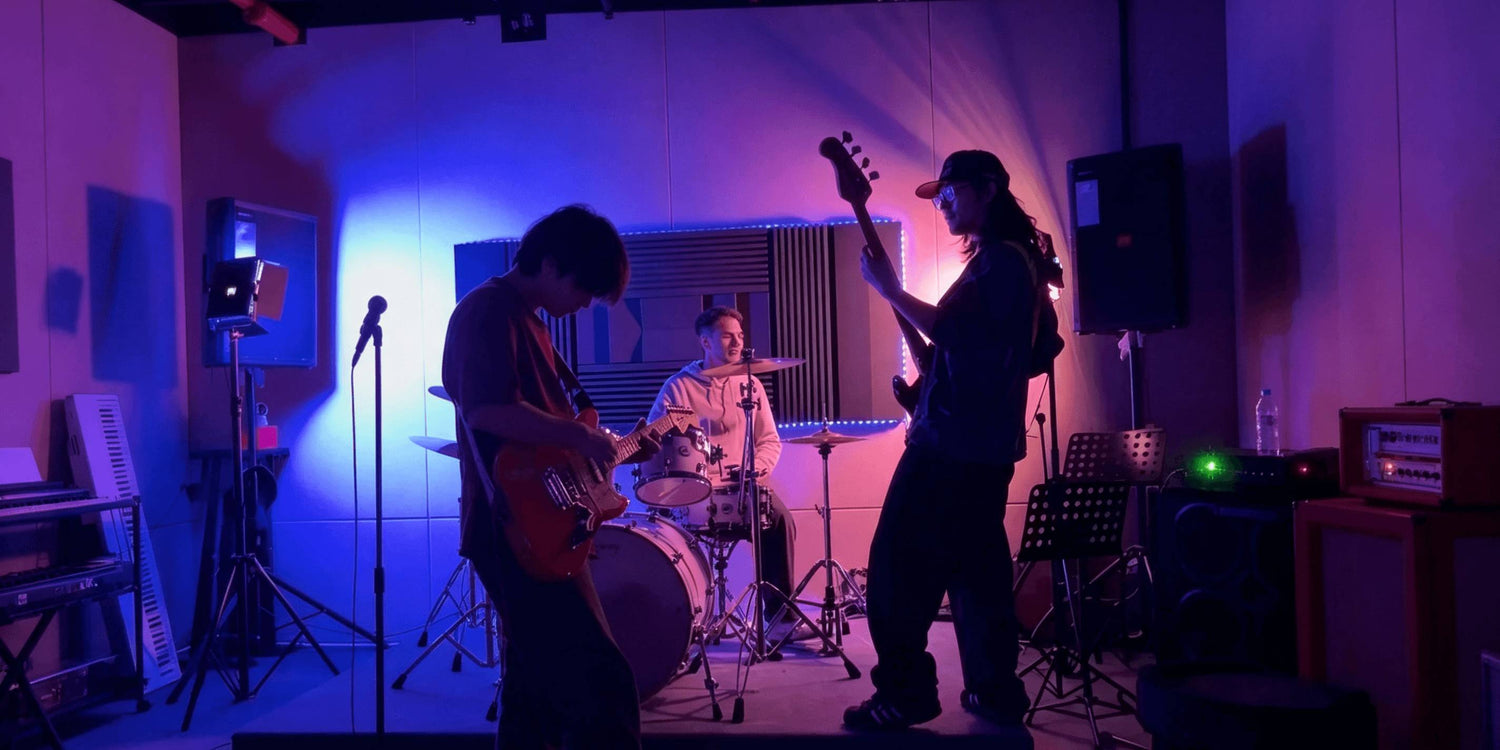
Introduction
A music room or dance practice space does not need a full stage rig to feel more inspiring. Many musicians, DJs, dancers, and creators end up practicing or recording under flat household white light, while a full professional stage lighting setup can quickly cost well over $1,000.
With a $500 lighting budget, the goal should be practical: create a better atmosphere, make the background more visually interesting, and keep the space comfortable for practice, filming, or personal sessions. Instead of buying too many small effect lights, it is usually smarter to build one or two strong lighting layers that can change the mood of the room immediately.
This guide explains how to plan a $500 music room and dance practice lighting setup in 2026, what kind of lighting gives the biggest visual improvement, and how to avoid spending your budget on effects that look exciting online but do not work well in a small indoor space. It focuses on fixed indoor creative spaces, not mobile live-event gigs.

Figure Out What Your Room Actually Needs First
Before you buy a single fixture, take an honest look at your space.
Music rooms and dance practice rooms are usually much smaller than a live stage, so the goal is not maximum output. What matters more is how light interacts with your walls, floor, mirrors, camera angle, and the person using the room.
A music-focused space may need a darker, more immersive background for DJ practice, guitar sessions, keyboard work, or content filming. A dance practice space may need clearer visibility, better wall color, and enough brightness to show body movement without shining directly into the eyes.
On a $500 budget, you mainly need to get three things right:
- Background atmosphere
- Comfortable, livable brightness
- Flexible color control
Many people start by asking how many lights they can buy for the money. A better question is what the room is missing.
If the room already has enough general brightness, your budget should go toward color and mood. If your videos look dull or flat on camera, a better background wash may help more than adding another small effect light.
Layer One: Light the Background First
In a fixed indoor creative space, the background usually creates the biggest visual change.
Most rooms already have ceiling lights, desk lamps, or natural window light. What they often lack is depth. A plain wall, empty corner, or flat practice room can make even good music or dance content look unfinished on camera.
That is why the first lighting layer should usually be a wall wash or background color layer.
Instead of aiming a light directly at yourself, place a wash fixture toward the side or rear of the room and point it at the wall, backdrop, curtain, or corner area. This creates color and atmosphere without making the room uncomfortable.
A simple placement method is:
- Place the fixture a few feet away from the wall
- Offset it slightly to one side
- Angle it upward or across the wall surface
- Keep it away from direct eye level
- Keep it outside the main camera frame when filming
For this kind of background color layer, the Betopper LPC1818 can be a practical option. As a color PAR light, it works well for adding rich atmosphere to walls, corners, and backdrop areas, making it useful for music rooms and dance practice spaces that need stronger visual mood without building a complicated rig.
In a dance practice room, background color can make movement videos look more polished. In a music room, it can help turn a regular spare room into a more intentional creative space.

Keep the Practice Area Comfortable
A common mistake in small-room lighting is chasing drama at the cost of comfort.
Whether you are dancing, playing an instrument, mixing music, or filming content, the room still needs to be usable for more than a few minutes. Lights that are too bright, mounted too low, or pointed directly toward the eyes can become distracting very quickly.
For a personal practice space, the best lighting is not always the brightest lighting. Moderate brightness with good color often works better than raw output.
In a music room, avoid placing a bright fixture directly behind your monitor, laptop, keyboard, or DJ controller if it causes screen glare. In a dance room, avoid placing lights at low angles where they may shine into the dancer’s eyes during turns, mirror practice, or floorwork.
A practical rule is:
Light the background first, then adjust the person in the room.
If the space still feels too dim after the background is lit, add soft front fill from a household lamp, LED panel, or low-output white light. Stage lighting should create mood and depth; it does not need to replace every practical light source in the room.
Add Movement Only If Your Room Can Handle It
Movement can make a music room or dance practice space feel more energetic, but it should match the scale of the room.
In a compact space, fast movement can quickly feel chaotic, especially if the ceiling is low, the wall is close, or there are mirrors in the room. The goal is not to recreate a nightclub inside a spare room. The goal is to add controlled motion that supports the atmosphere.
For users who want a more dynamic second layer, the Betopper LM0740 can work well in a DJ corner, music room, or creative studio setup. Its moving wash effect and adjustable coverage can add motion to the background without making the room feel harsh or overbuilt.
Movement can work well for:
- DJ practice sessions
- Music playback videos
- Freestyle dance recordings
- Background motion for creative content
- Higher-energy personal practice sessions
For daily use, slower movement usually looks cleaner than fast chase patterns. A gentle sweep across the back wall or ceiling can add life to the room without overwhelming the space.
If you are filming, always preview the movement through your camera before recording. Moving light can look very different on screen than it does in person.

Avoid Spending the Budget on Effects That Do Not Improve the Room
At around $500, it can be tempting to buy several small effect lights because they look exciting in short product videos. The issue is that many small effects create dots, flashes, or random movement without improving the room as a whole.
For a home music room or dance practice space, one or two useful fixtures that improve the entire environment will usually serve you better than a collection of small effects that only look interesting for a few minutes.
Before buying any light, ask:
- Will this improve my background?
- Can it create a clean color layer?
- Is it comfortable for long practice sessions?
- Does it look good on camera?
- Will I still use it after the first week?
- Can it become part of a future setup?
If a fixture does not help the room feel better, film better, or function better, it may not be the right use of a limited budget.
The most practical approach is to build one strong atmosphere layer first. After that, you can decide whether the room needs movement, better control, or additional fill light.
Two Practical Ways to Build Your $500 Setup
There are two smart directions for a $500 music room or dance practice lighting setup.
Option 1: Wash-Focused, Atmosphere-First
This is the safer choice for most music rooms and dance practice spaces.
The budget goes mainly toward creating a strong background color layer. The fixture is aimed at the wall, backdrop, or rear corner rather than directly at the user. The result is simple, comfortable, and easy to use every day.
This approach works especially well if:
- The room is small or medium-sized
- You record practice videos
- You want a cleaner-looking background
- You do not want complicated programming
- You want the setup to feel useful every day
For many small indoor rooms, this may start with one well-placed wash fixture before adding more lights later.
Option 2: Movement-Oriented, Energy-First
This direction works better for DJ rooms, music content spaces, or users who want more visual energy.
Instead of only lighting the background, this setup adds slow motion, color movement, and wider coverage. It can make the room feel more alive, but it also requires more care in placement and control.
This approach works better if:
- The room has enough space for movement
- The ceiling is not too low
- The fixture can be aimed away from the eyes
- You want background motion for music or DJ content
- You are willing to test the look on camera
If your room is compact, has mirrors on multiple walls, or is used mainly for long practice sessions, keep movement restrained.
For most people starting out, the best rule is simple:
Background color first. Movement second.
Plan for Control, Not Just Fixtures
The fixture is only part of the setup. You also need to think about how you will run the lights.
For a personal room, you do not always need a full DMX control system on day one. Built-in programs, sound-active modes, remote control, or simple DMX control may be enough depending on the fixture and your use case.
However, some level of repeatable control becomes useful once you start filming or practicing regularly. You may want one look for calm rehearsal, one look for high-energy sessions, and one look built specifically for video recording.
A simple starting palette could include:
- Warm or soft tones for everyday practice
- Blue or purple backgrounds for music sessions
- Brighter washes for dance video shoots
- Slow movement for DJ practice
- Muted static looks for filming
When you find a setting that works well on camera or feels good during practice, save it if possible or write it down. A repeatable lighting look is much more useful than a random effect you cannot recreate later.
What to Upgrade Later
A $500 lighting setup should be treated as a foundation, not a final version of the room forever.
After a few weeks of real use, you will know what the space actually needs next. Some users may want a second matching wash fixture for better symmetry. Others may want simple DMX control, safer cable routing, better stands, or soft front fill for video.
Upgrade based on real use, not impulse.
If the background already looks good, the next step may be better control. If the room feels too static, the next step may be controlled movement. If videos still look dark, the next step may be soft front fill rather than another effect light.
This approach keeps the setup practical and prevents wasted spending.
Final Advice
A $500 lighting setup for a music room or dance practice space is not trying to be a scaled-down stage rig. Its job is to make the room more comfortable, more inspiring, and better on camera.
Start with the background. Use color to set the mood. Keep brightness comfortable for long sessions. Add movement only where the room can handle it. Avoid spending the entire budget on small effects that do not improve how the room actually feels.
For most fixed indoor creative spaces, one strong atmosphere layer will make a bigger difference than several scattered effects. Build that foundation first, then upgrade slowly based on how you actually use the room.
For more stage lighting options for music rooms, dance practice spaces, and creative indoor setups, visit Betopper’s official website:
https://betopperdj.com/

![What to Look for When Buying IP65-Rated LED PAR Lights for Outdoor Events & Backyard Gatherings [2026]](http://betopperdj.com/cdn/shop/articles/bk8.7.jpg?v=1786083692&width=2848)

コメントを残してください
全てのコメントは、掲載前にモデレートされます
このサイトはhCaptchaによって保護されており、hCaptchaプライバシーポリシーおよび利用規約が適用されます。