
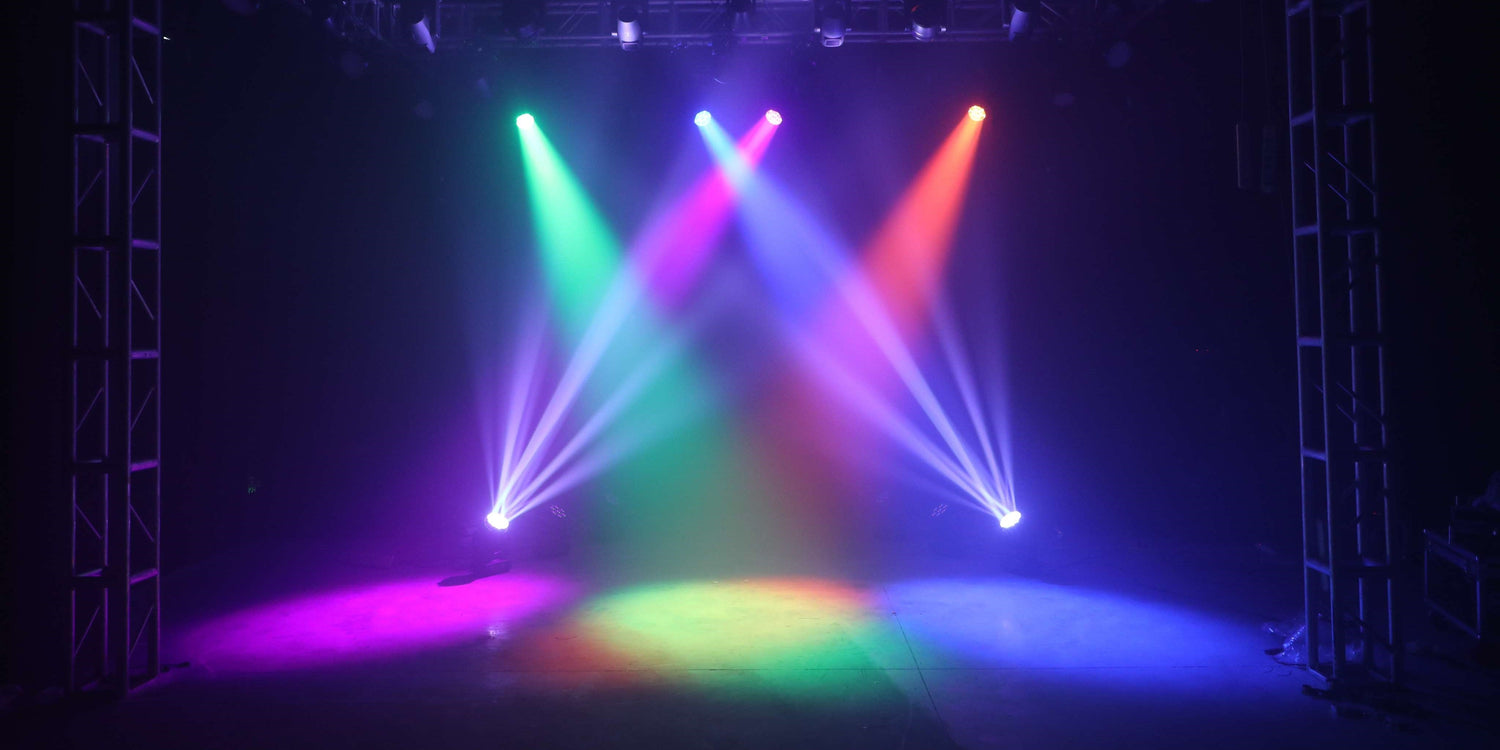
Moving head lights may look similar from the outside, but what they do — and how they shape an event experience — can be drastically different. The three primary categories you’ll encounter are Beam, Spot, and Wash, and each one serves a unique purpose in lighting design.
Whether you're a DJ, a small venue operator, or an event technician, understanding these differences helps you build cleaner, more intentional lighting shows. This guide breaks down the core characteristics of each type, when to use them, and how they work together to create professional results.

What Is a Beam Moving Head?
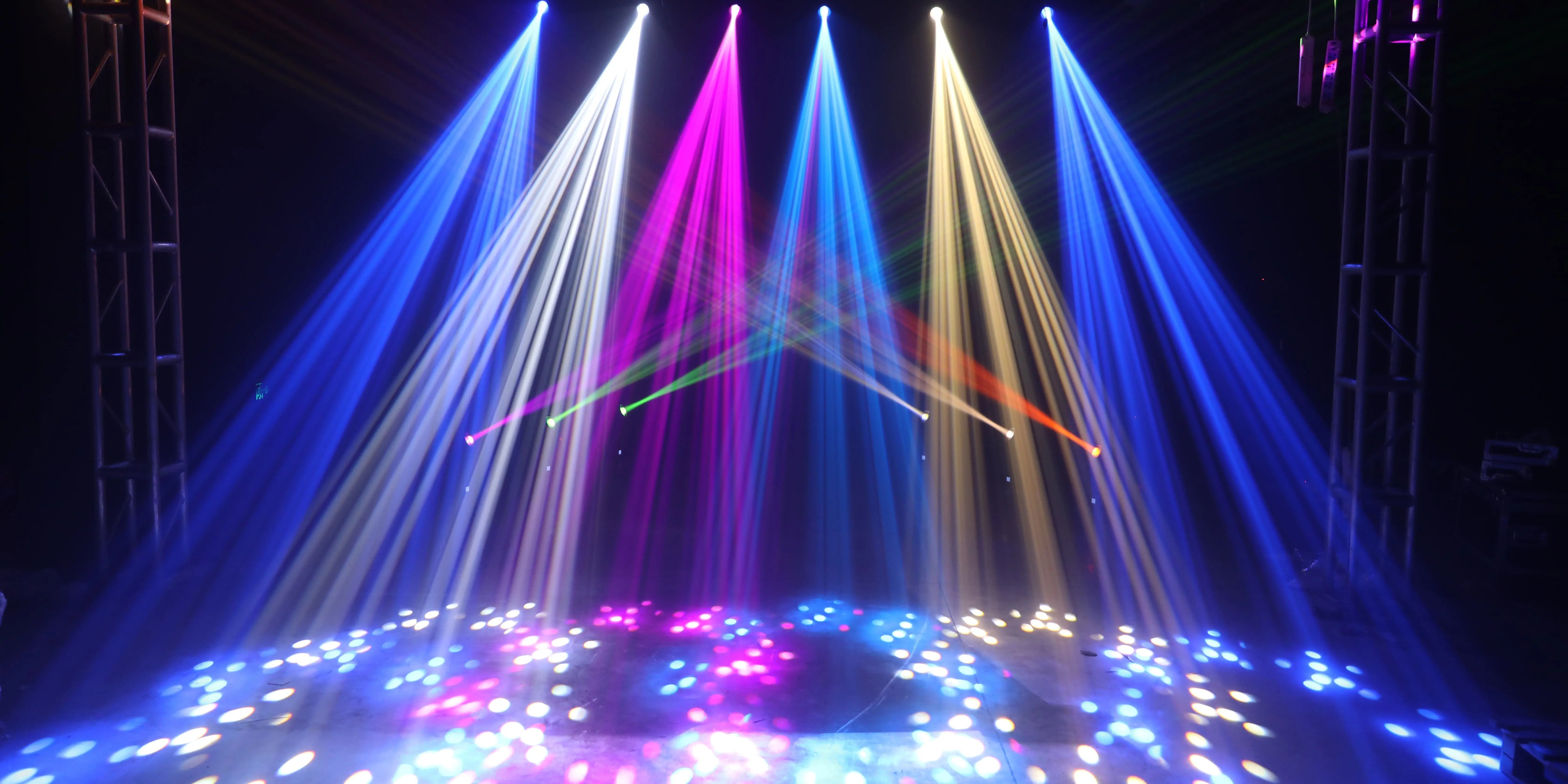
Beam fixtures produce tight, concentrated shafts of light that stay defined over long distances. They create high-impact aerial looks and the “laser-like” effects commonly seen in clubs and festivals.
Key Characteristics
- Narrow beam angle (typically 1.5°–5°)
- Punchy, high-intensity output
- Great for aerial looks with haze
- Performs best in medium and large rooms
Where Beams Shine
- Nightclubs
- High-energy DJ sets
- Concert-style effects
- Moments requiring visual impact
Limitations
- Can easily blind guests in low ceilings
- Not suitable for soft ambient lighting
- Requires haze to be visible
Example Category
A beam-style fixture like the LB295 represents this type well, offering clean mid-air lines and strong punch in haze-heavy environments.
What Is a Spot Moving Head?
Spot fixtures are designed for gobo projection, textures, and precise pattern work. They are about detail rather than sheer intensity, making them ideal for adding visual storytelling to an event.
Key Characteristics
- Medium beam angle (10°–25°)
- Gobo wheels for shapes and textures
- Prism effects and sharp or soft focus
- Useful for stage, backdrop, and floor projection
Where Spots Shine
- Performance stages
- Theatrical looks
- Logo projection
- Wall or floor textures
Limitations
- Less punchy than beams
- Needs surfaces to project onto
- Can clutter visuals if overused
What Is a Wash Moving Head?
Wash fixtures provide broad, soft illumination and even color coverage. They form the foundation of most professional lighting designs because they create the ambient layer that supports everything else.
Key Characteristics
- Wide beam angle or flexible zoom
- Smooth, blended color mixing
- Soft, diffused edges
- Ideal for filling large areas with color
Where Washes Shine
- Weddings and receptions
- Stage and performance lighting
- Side or front-fill for performers
- Camera-friendly ambience
Limitations
- Cannot produce sharp aerial beam lines
- No gobo or texture projection
- Not intended for effect-heavy mid-air looks
Example Category
A zoom-capable wash such as the LM1915R represents this category well — offering wide, even coverage and rich color output suitable for weddings, stages, and ambient lighting.
What About Hybrid Moving Heads?
Hybrid fixtures combine Beam, Spot, and Wash functions into one body. They are extremely versatile and often used when flexibility matters or when a lighting designer wants multiple capabilities without carrying multiple fixture types.
Why Hybrids Are Useful
-
One fixture can perform multiple roles
-
Saves space in small rigs
-
Ideal for DJs who need variety
-
Useful for venues with limited mounting options
Example Category
BSW200 — a true Beam/Spot/Wash hybrid example
- In beam mode, it produces tight aerial lines.
- In spot mode, it offers gobos, patterns, and focused textures.
- In wash mode, its zoom range fills areas with soft color.
Hybrids like this are commonly used in mobile rigs and compact event setups that need maximum versatility.
How Beam, Spot, and Wash Work Together
The three types are designed to complement one another:
Wash = Foundation
Provides ambience and fills space with soft, even color.
Spot = Definition
Adds detail with gobos, patterns, and texture.
Beam = Energy
Creates sharp aerial effects and fast, dramatic looks.
A polished lighting show often uses at least two of these types — and hybrids add even more flexibility.
How to Choose Which Type You Need
Use this quick decision guide:
✔ Choose Wash if you want:
- Ambient color
- Soft illumination
- Camera-friendly visuals
✔ Choose Spot if you want:
- Patterns, gobos, or textured projection
✔ Choose Beam if you want:
- Sharp aerial lines and high-energy effects
✔ Choose Hybrid if you want:
- Maximum versatility from fewer fixtures
Think in terms of visual outcome, not wattage or specifications alone.
FAQ: Beam vs Spot vs Wash
Q1: Are hybrids better than dedicated fixtures?
Not always. They provide flexibility, but dedicated fixtures still excel in their specialty modes.
Q2: Do beams work without haze?
Not effectively. They require haze to create visible mid-air lines.
Q3: Which fixture type is most essential for weddings?
Wash lights are the foundation because they are camera-friendly and create a flattering environment.
Q4: Which type is best for DJs who only want one style of effect?
Beams — but only in venues where haze is allowed.
Q5: Do spots help small venues?
Yes, if used thoughtfully. They add texture without overwhelming the space.
Final Thoughts
Understanding the differences between Beam, Spot, Wash, and Hybrid fixtures helps you design cleaner, more professional lighting shows. Each type has a unique role, and knowing when to use which allows you to create depth, clarity, and atmosphere in any venue.
If you’d like to explore fixture types or compare specifications, you can find full details and examples on our official site:
👉 https://betopperdj.com/
We update the collections regularly so you can choose the lighting tools that best match your style and event needs.

Laisser un commentaire
Tous les commentaires sont modérés avant d'être publiés.
Ce site est protégé par hCaptcha, et la Politique de confidentialité et les Conditions de service de hCaptcha s’appliquent.