
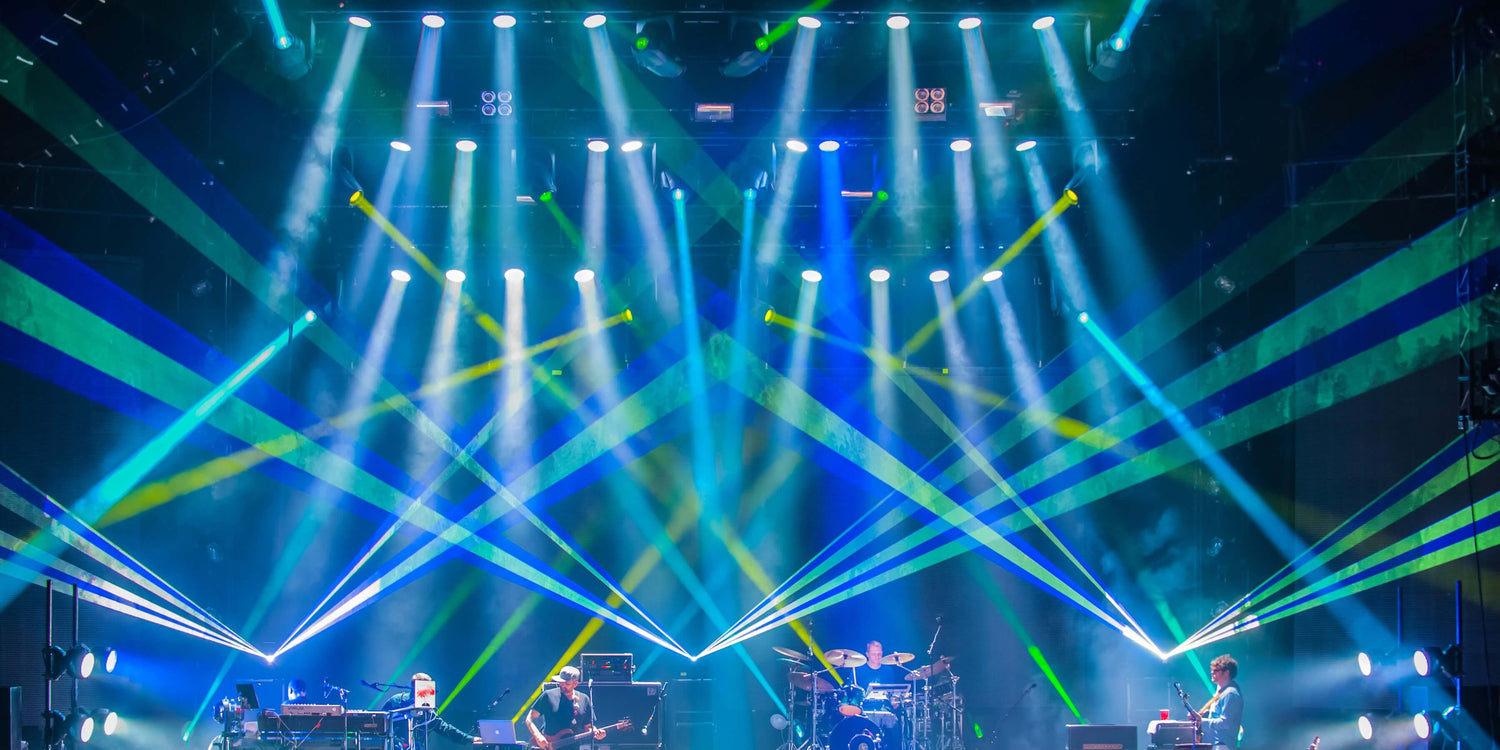
Small venues often present some of the toughest challenges for DJs and small event lighting designers.
The ceilings are lower, the usable floor space is limited, and there’s rarely enough room to place fixtures exactly where you’d like. Yet, with the right approach, even a tight room can feel immersive and professional.
This guide focuses on practical lighting strategies specifically for compact spaces — whether you’re working in a bar, a wedding venue, a lounge, a community hall, or a small club.

Understand the Constraints of Small Rooms
Before choosing lights or building effects, it's important to acknowledge the limitations of compact venues:
- Low ceilings reduce pan/tilt freedom
- Short throw distance limits wide washes
- Reflective walls can cause harsh glare
- Limited mounting points restrict creative placement
- Audience proximity makes blinding easy
Recognizing these constraints early helps you design a rig that works with the room instead of fighting against it.
Keep the Visual Language Clean
In small venues, simpler effects tend to look more intentional.
Avoid heavy strobing or extremely fast movements — these often feel chaotic when the space is small. Instead, aim for:
- Slow pan/tilt sweeps
- Color transitions
- Beam accents rather than full-stage bombardment
- Layered looks using 2–3 fixtures instead of 6–8
A clean lighting style not only elevates the room—it makes your entire show feel more polished.
Use Height and Angles to Avoid Glare
Glare is the number one complaint from small-space guests.
Because fixtures sit closer to eye level, the beams hit people directly.
A few simple techniques can eliminate this:
- Place moving heads as high as possible on totems or stands
- Use a 15–25° upward tilt to avoid faces
- Aim beams across the room instead of at the audience
- Use side-lighting to add depth without blinding anyone
A small change in angle can dramatically improve comfort and visual quality.
Choose Colors That Add Depth
Color choice plays a surprisingly big role in how “roomy” a small venue feels.
Cool tones (blue, purple, cyan) can make a tight space feel deeper and softer.
Warm tones (amber, red, orange) should be used as accents rather than full-room floods, as they can overwhelm compact areas.
Try pairing:
- Blue + Amber
- Purple + Cold White
- Cyan + Magenta
These combinations create contrast without visual clutter.
Minimal Rigs Work Best
One of the most common misconceptions among DJs is thinking you need a large number of fixtures to create an impressive show.
In reality:
- 2 lights can do more than 6 when they’re used well
- Symmetry matters less than clean, intentional placement
- A balanced blend of wash + movement looks complete without being busy
For instance, a soft zoom wash paired with a single narrow-beam head can fill a small venue effectively while keeping your show visually organized.
Recommended Lighting Pairing
If you prefer a practical, minimal setup that fits small venues:
A soft wash fixture such as the LM1915R offers smooth ambient coverage without overwhelming the room.
A tight-beam moving head like the LB150 adds controlled movement that cuts through the space cleanly.
This simple two-fixture combination covers both mood and motion—often more effectively than large, crowded rigs.
❓ FAQ: Small Venue Lighting
Q1: How many moving heads do I need for a small venue?
Most 40–120 sqm rooms only need 2–4 moving heads. Placement and angle matter more than quantity.
Q2: Are beams too strong for tight spaces?
Not necessarily. Narrow beams look great in small rooms as long as they are angled upward and not pointed directly at guests.
Q3: What is the best height to place lights in a compact venue?
The higher the better—ideally above eye level. Even a 1.6–2m totem can prevent glare significantly.
Q4: What colors work best for small environments?
Cool tones (blue, purple, cyan) create depth. Warm colors should be accents, not full-room fills.
Q5: Do I need a hazer for a small room?
A light haze helps define beams, but in very tight spaces, low-output haze is recommended to avoid fog buildup.
Final Thoughts
Small venues can deliver surprisingly professional lighting results when the design focuses on intention rather than quantity. Clean movements, thoughtful color choices, and careful placement often outperform larger, more chaotic rigs.
If you're exploring new fixtures for compact spaces, a soft wash like the LM1915R or a controlled narrow-beam head like the LB150 can be excellent additions without overwhelming the room.
To see more fixture options or plan your next upgrade, feel free to explore our official site:
👉 https://betopperdj.com/
We keep our lighting collections updated so you can build a setup that truly fits your space and style.

Laisser un commentaire
Tous les commentaires sont modérés avant d'être publiés.
Ce site est protégé par hCaptcha, et la Politique de confidentialité et les Conditions de service de hCaptcha s’appliquent.