









Introduction
Before buying any lighting fixtures for a nightclub, you must decide four layout-level questions:
- Which functional zones exist in the venue
- Which zones carry visual priority
- Which lighting functions belong in each zone
- Which zones must remain independent for control and future expansion
If these four decisions are not made before procurement, fixture selection becomes guesswork—no matter how good the products look on paper.
Everything else (brightness, effects, price) comes after layout logic is fixed.

1. The Five Functional Lighting Zones Every Nightclub Must Define
A nightclub lighting system is not one space—it is a set of independent visual zones with different purposes.
Before buying fixtures, every venue must clearly define the following five zones:
1) DJ / Performance Zone
Function: Visual identity and focal point
Primary goal: Draw attention, anchor the room
Lighting here defines:
- Where the audience looks
- How drops and peaks are perceived
- The club’s recognizable visual signature
This zone is not interchangeable with any other.
2) Dancefloor Zone
Function: Energy and movement
Primary goal: Translate rhythm into motion
This zone supports:
- BPM-driven movement
- Crowd immersion
- Energy continuity
It should support, not overpower, the DJ zone.
3) Wall & Ceiling Zone
Function: Spatial depth and atmosphere
Primary goal: Prevent visual flatness
This zone:
- Defines perceived room size
- Creates depth behind the action
- Stabilizes visuals during low-energy moments
Without it, even powerful effects feel disconnected.
4) Entrance & Transition Zone
Function: Psychological transition
Primary goal: Prepare guests for the main space
This zone shapes:
- First impressions
- Flow between spaces
- Visual pacing
It is often ignored—and frequently mis-purchased.
5) VIP / Seating Zone
Function: Comfort and hierarchy
Primary goal: Separation without isolation
Lighting here must:
- Avoid glare
- Maintain visibility
- Preserve exclusivity
High-intensity effects here usually create complaints, not atmosphere.
2. The Three Most Common Layout Misjudgments That Lead to Buying the Wrong Fixtures
Most purchasing mistakes are not product failures—they are layout errors.
Mistake 1: Treating the Dancefloor as the Main Visual Anchor
When all visual power is concentrated on the dancefloor:
- The room loses hierarchy
- Drops feel chaotic
- The DJ presence weakens
Result:
Fixtures feel powerful individually, but the system lacks direction.
Mistake 2: Using Wash Lighting as a Primary Effect Layer
Wash lighting is designed to:
- Fill space
- Support color continuity
It is not designed to:
- Create readable movement
- Deliver impact moments
When wash fixtures are expected to behave like effect lights, disappointment is guaranteed.
Mistake 3: Placing All Fixtures on the Same Physical Plane
When fixtures are:
- All ceiling-mounted
- Or all rear-mounted
- Or all front-facing
The system loses depth.
The same fixture that looks dynamic in demos becomes visually flat in real venues due to lack of spatial separation.
3. Why the Same Fixture Performs Completely Differently Depending on Placement
This is one of the most misunderstood realities in nightclub lighting.
A fixture does not perform in isolation.
It performs relative to position, background, and adjacent zones.
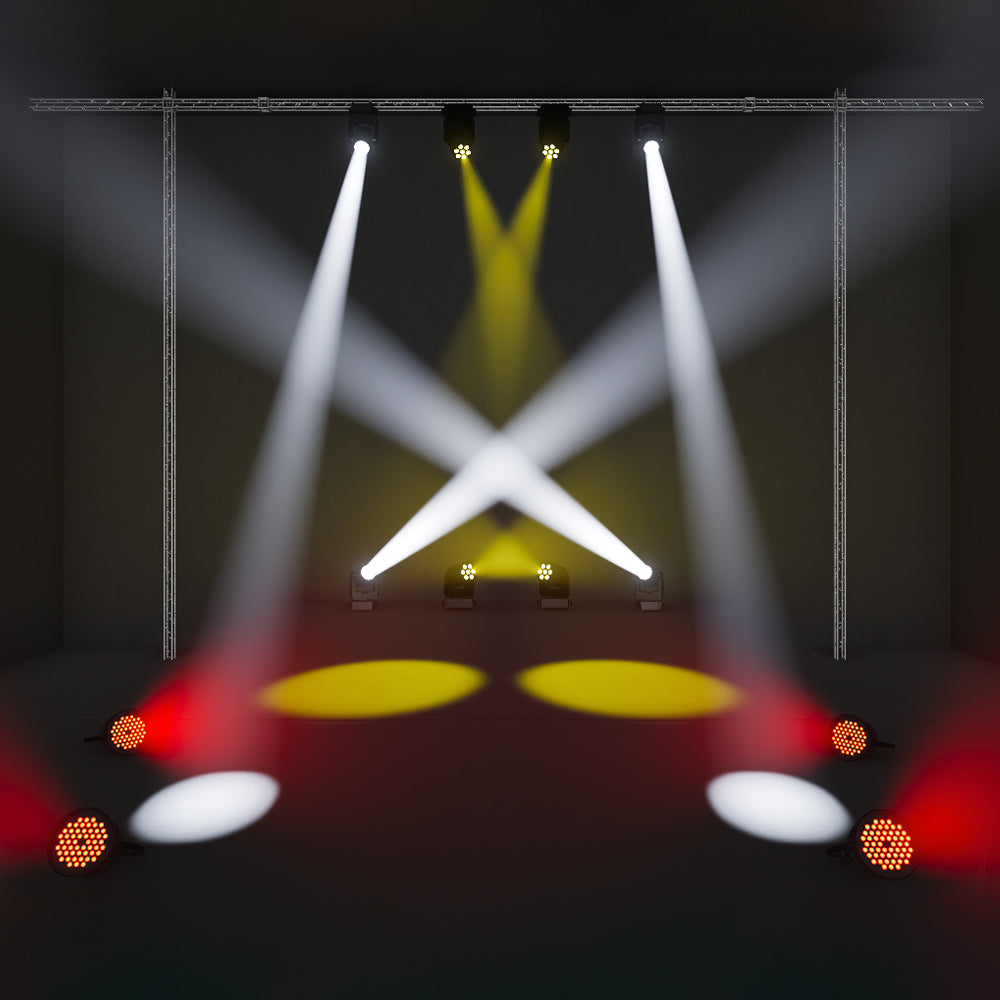
Example Logic (No Product Names):
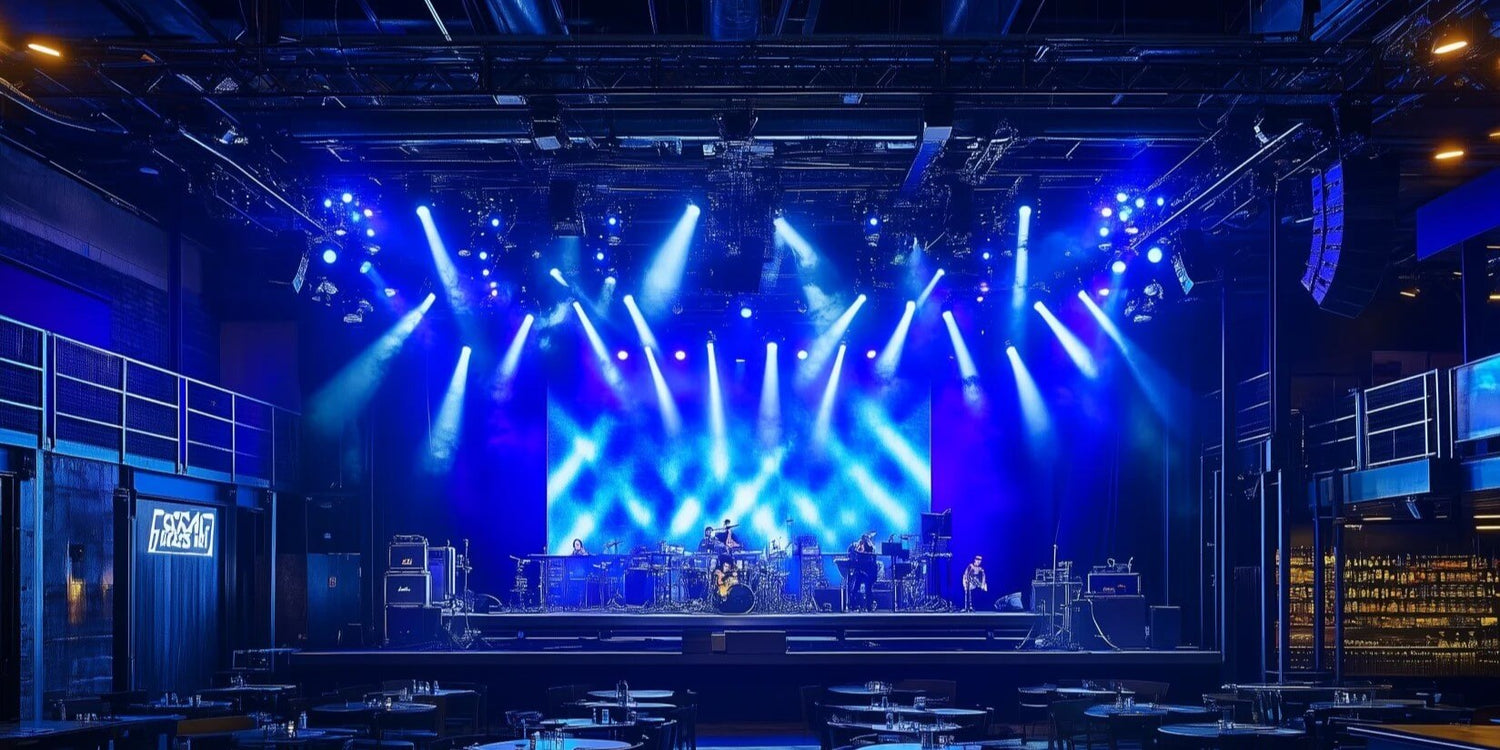
- A beam fixture behind the DJ:
- Defines direction
- Frames performance
- Enhances drops
- The same beam fixture over the dancefloor:
- Competes with movement
- Increases glare risk
- Loses focal clarity
Conclusion:
Fixture capability ≠ system performance.
Placement defines function.
4. Layout Decisions That Lock or Unlock Future Expansion
Layout logic directly determines whether a system can grow—or must be rebuilt.
Before buying fixtures, you must answer:
- Which zones must be independently controllable?
- Which zones may expand later?
- Which zones should never share control paths?
If zones are not logically separated:
- Control universes fill too quickly
- Expansion requires rewiring
- New fixtures behave unpredictably
This is why many clubs are forced into full rebuilds—not because fixtures failed, but because layout logic was never defined.
FAQ — Before Buying Any Nightclub Fixtures
Q1. What must be decided before buying lighting fixtures?
A: Lighting zones, control architecture, expansion path.
Q2. Can fixtures be selected before layout is defined?
A: No. Fixture choice without layout logic leads to rework.
Q3. Is layout an installation issue?
A: No. It is a procurement decision.
Q4. Why do fixtures perform differently in real clubs than in demos?
A: Real venues impose ceiling height, sightline, and zoning constraints.
Q5. What is the most common purchasing mistake?
A: Buying fixtures without assigning them a fixed system role.
5. What’s Next
In the next article, we will move one step deeper—
from layout logic to fixture suitability:
- What makes a fixture truly suitable for long-term nightclub operation
- Why some lights fail under continuous load even if specs look strong
- Which optical, thermal, and control behaviors matter in real clubs
Layout defines where lighting works.
Fixture suitability defines whether it survives there.
💡 Want to see how Betopper can help you plan your nightclub lighting system and choose the right fixtures?
👉 Visit our website for full product details and expert guidance: https://betopperdj.com

Leave a comment
This site is protected by hCaptcha and the hCaptcha Privacy Policy and Terms of Service apply.