What’s the Most Cost-Effective Wedding Lighting Setup for DJs?

What’s the Most Cost-Effective Wedding Lighting Setup for DJs?

Introduction

For most DJs, weddings are where the real money is—but also where expectations are the highest.

Couples don’t just want music. They want an atmosphere that feels elegant during dinner and looks like a full production once the dance floor opens. The problem is, many DJs are trying to deliver that experience while dealing with tight budgets, limited vehicle space, fast setup times, and gear that has to work flawlessly every single night.

That’s why more DJs are searching for cost-effective wedding lighting solutions—not the cheapest option, but setups that actually make sense for real-world use. A good DJ wedding lighting setup should be quick to deploy, easy to transport, reliable across different venues, and most importantly, capable of creating a high-end look without requiring a high-end budget.

In this guide, we’ll break down what “cost-effective” really means in the context of weddings, compare renting vs buying, and show you how to build practical, scalable wedding lighting packages using affordable uplighting and smart upgrades like wireless DMX for DJs—so you can deliver more impact, work more efficiently, and increase your revenue per event.

What Does “Cost-Effective” Really Mean for Wedding DJs?

When DJs search for cost-effective wedding lighting, what they often think about first is price.

But in real-world wedding work, price is only a small part of the equation.

A lighting setup becomes truly cost-effective when it helps you earn more, work faster, and reduce risk over time. In other words, it’s not about spending less—it’s about getting the highest return from what you spend.

Think about how weddings actually run. You’re loading in and out of venues every weekend, often under tight schedules, sometimes with limited help. A setup that takes an extra 30 minutes to rig, requires complicated cabling, or doesn’t fit efficiently into your vehicle is already costing you more than you think. Time, in this business, directly translates into money—and energy.

Then there’s reliability. Unlike club installations, wedding DJs don’t get second chances. If a light fails during a first dance or key moment, it immediately impacts the client experience. That’s why durability and consistency are part of cost-effectiveness, even if they don’t show up on the price tag.

Finally, there’s revenue potential. The right lighting setup doesn’t just support your performance—it becomes something you can sell. Many DJs now offer tiered wedding lighting packages, where clients can upgrade from a basic setup to a more immersive experience. Even a modest add-on—say $150 to $300 per event for lighting—can quickly recover your investment.

To put it simply: a setup that costs $1,000 but pays itself off in five weddings is far more valuable than a cheaper setup that limits what you can offer or slows you down.

This is why experienced DJs focus on affordable wedding lighting that balances performance, efficiency, and long-term use—not just the lowest upfront cost.

Renting vs Buying Wedding Lighting: Which Is More Cost-Effective?

For many DJs, renting lighting feels like the easy choice. There’s no upfront cost, and you don’t have to worry about maintenance. If you only do occasional weddings, that can work.

But once weddings become consistent, renting quickly becomes expensive. You’re paying every event, dealing with inconsistent gear, and you can’t build a recognizable setup or offer structured wedding lighting packages.

Buying flips that completely. Instead of a recurring cost, your lighting becomes an asset. After just a few events, a well-planned cost-effective wedding lighting setup can pay for itself—and from that point on, it increases your profit on every gig.

Just as important, owning your gear gives you control. You know how it performs, how fast you can set it up, and how it fits into your workflow—something that matters a lot when you’re working tight wedding timelines.

If you’re doing weddings regularly, buying isn’t just cheaper—it’s smarter.

What Makes Wedding Lighting Look “Premium”?

A wedding lighting setup looks premium not because it uses more fixtures, but because it feels intentional, balanced, and visually cohesive.

In real wedding environments, guests don’t judge lighting by quantity. What they actually notice is whether the space feels designed, whether transitions between moments are smooth, and whether the dance floor has enough energy once the party begins.

For this reason, a strong DJ wedding lighting setup is typically defined by three key qualities:

🌿 First: Does the Space Feel “Complete”?

During dinner and early moments, lighting should make the entire space feel clean, unified, and well-structured—not partially lit or uneven.

This is where controlled ambient lighting, such as uplighting, plays a crucial role. It shapes how guests perceive the space and helps create a consistent visual foundation.

🔄 Second: Can It Transition Between Moods?

A wedding is built around key moments.

Lighting needs to evolve with the timeline, shifting naturally from:

👉 calm and elegant → to → energetic and dynamic

If the lighting stays the same throughout the event, even a large setup can feel flat.

A professional system is one that changes with the flow of the event.

🌐 Third: Is the Light Evenly Distributed?

When lighting is overly concentrated in one area, the space can feel unbalanced—even if the fixtures are powerful.

A well-designed setup doesn’t overemphasize a single point. Instead, it ensures the entire room looks visually consistent from different angles.

What’s the Most Cost-Effective Wedding Lighting Setup for DJs?

If you’re a mobile DJ, wedding DJ, or managing a multi-op DJ business, you’ve probably asked yourself this more than once:

What lighting setup gives you a professional look, fast setup, easy transport—and pays for itself quickly?

Here’s the direct answer:

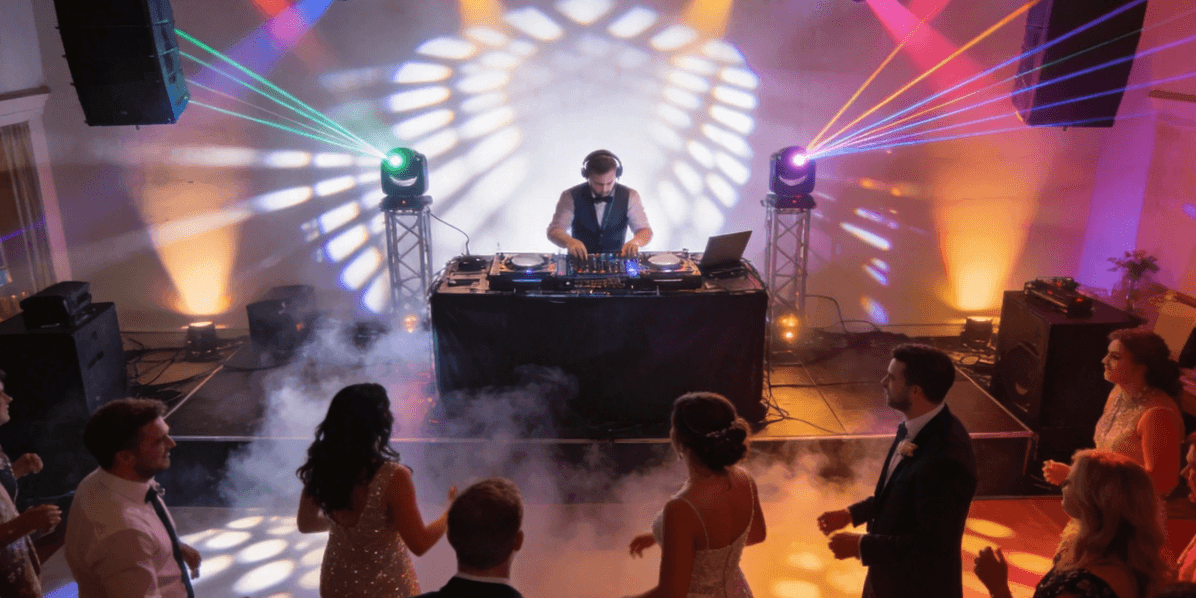
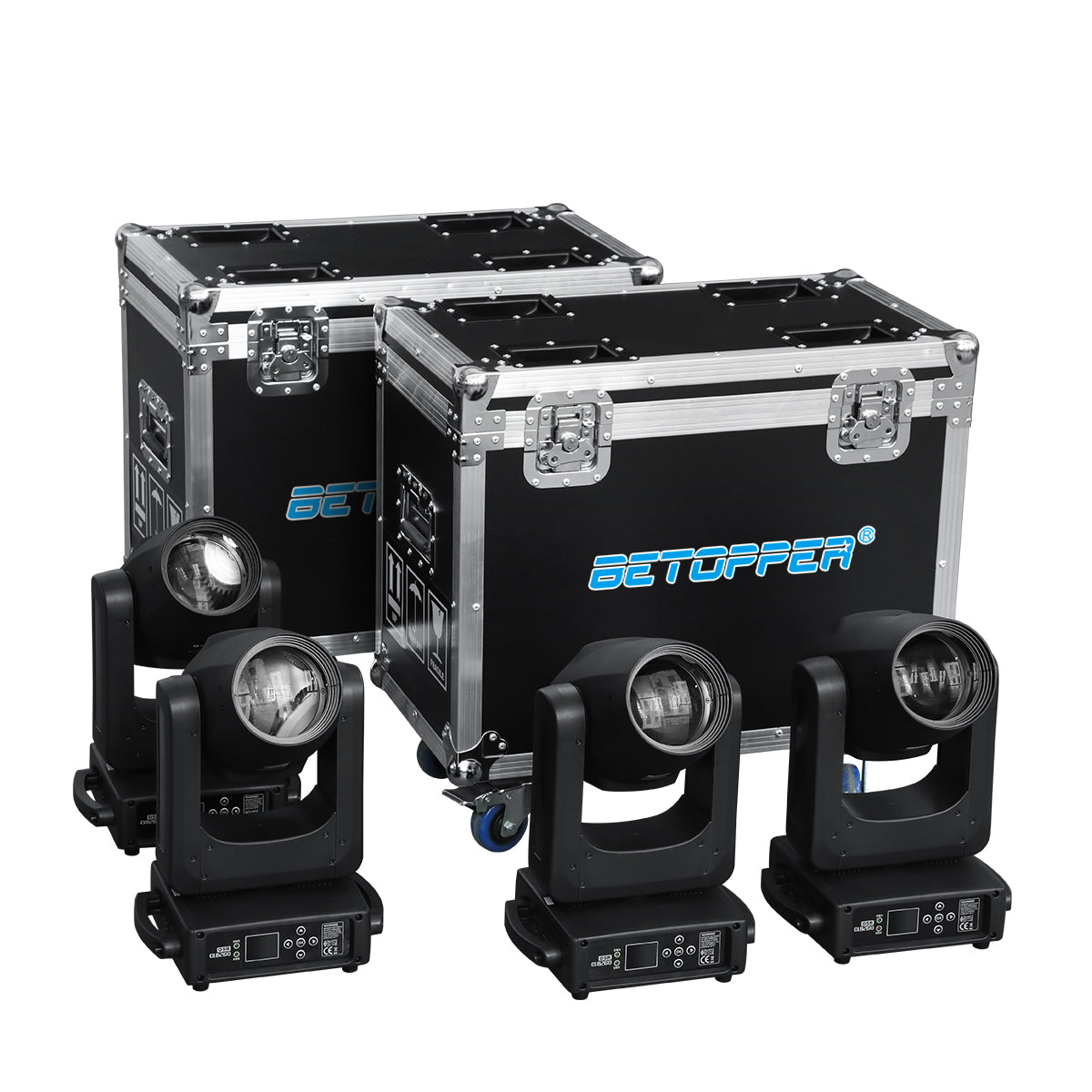
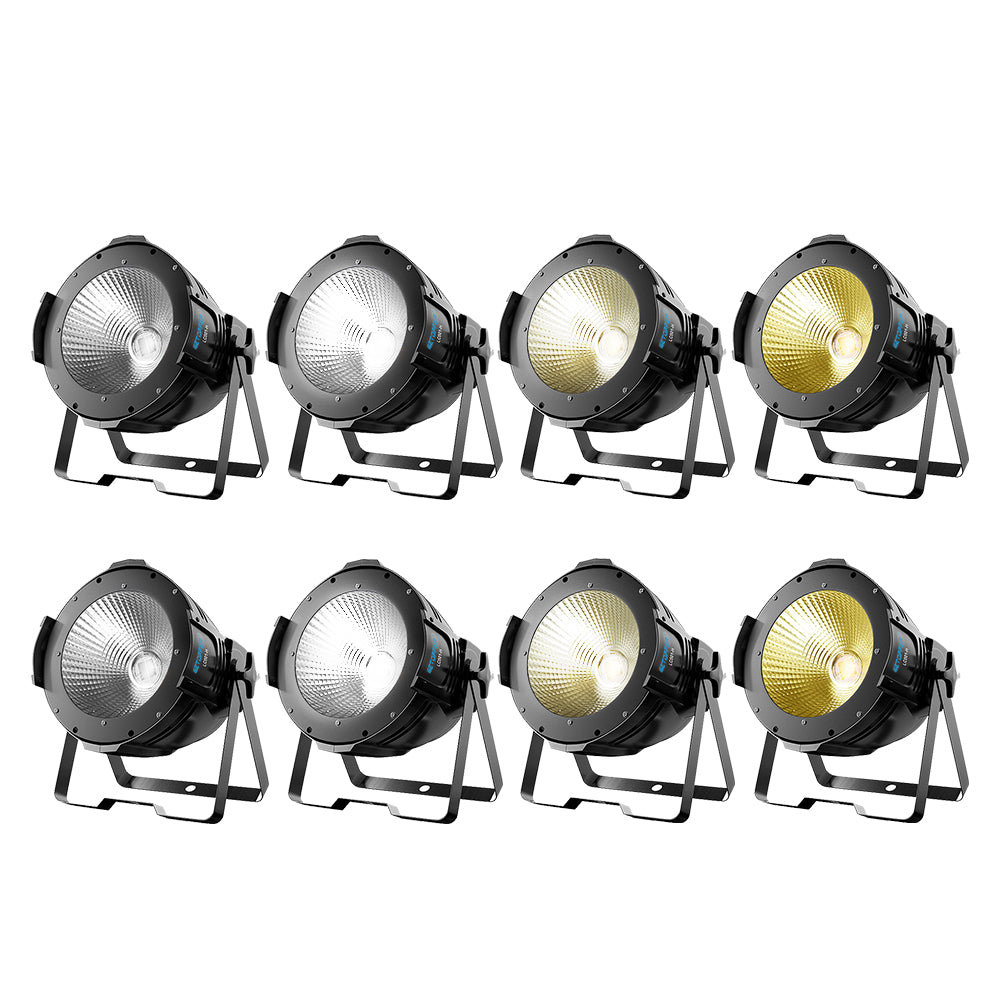
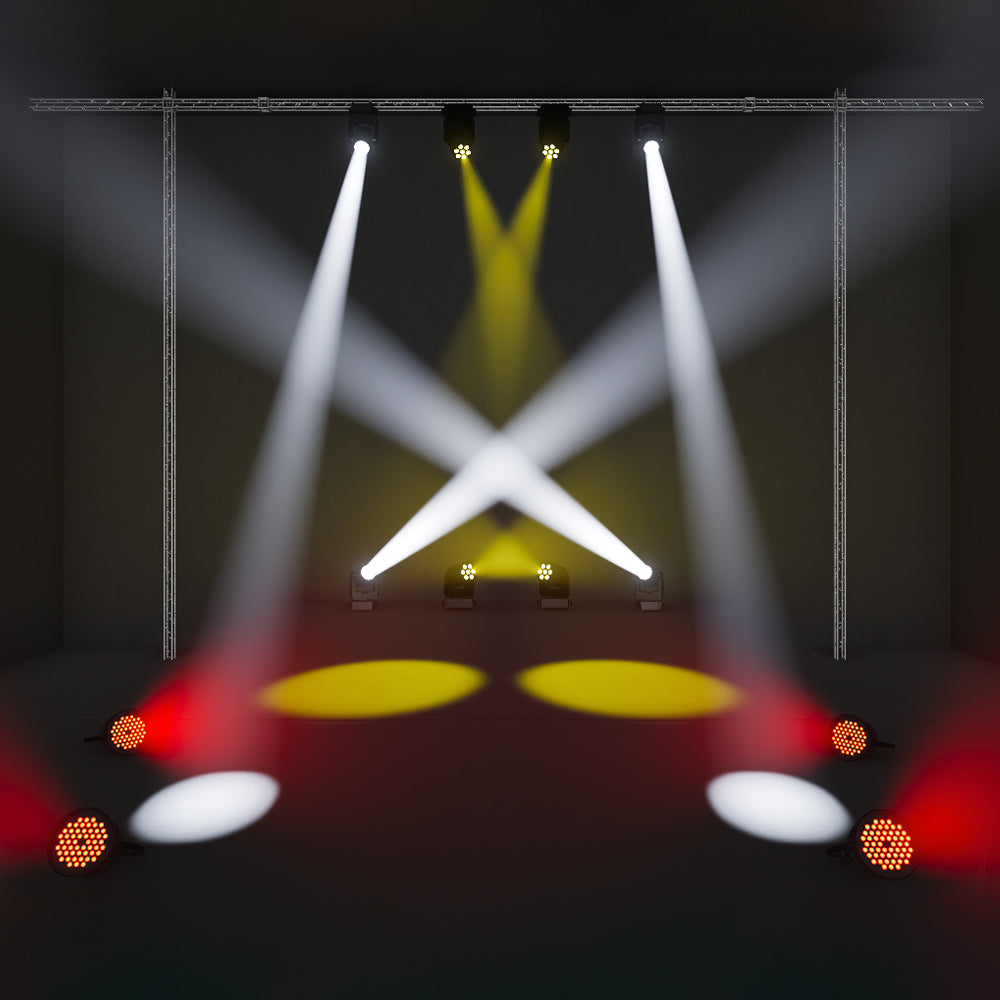
A system built around 8 fixtures—including 4–6 uplights, two compact moving heads, and two high-CRI COB blinder lights—is one of the most cost-effective wedding lighting setups for DJs.

This combination covers the full wedding timeline, from dinner ambiance to dance floor energy, without unnecessary complexity.

Below, we’ll break down each component, explain why this setup works, and how you can scale it as your business grows.

The Short Answer: What to Buy

Fixture Type Quantity Purpose
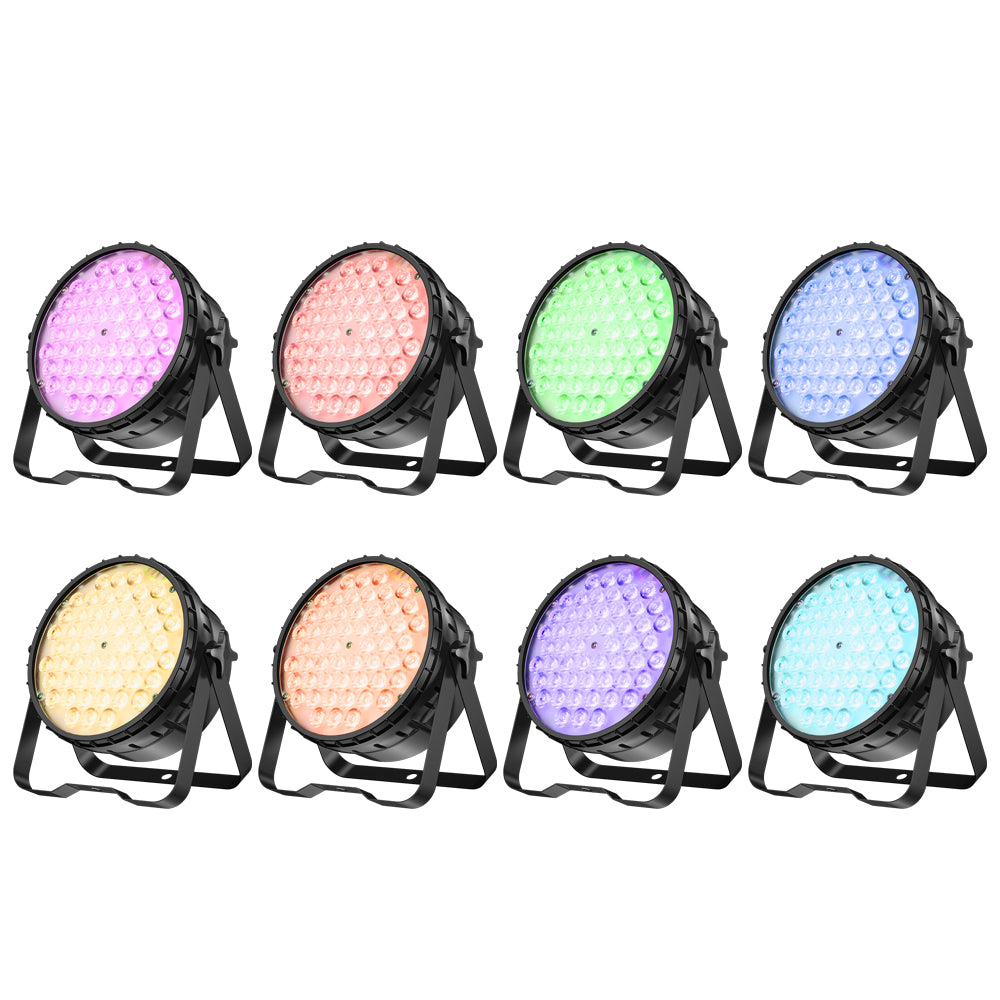
RGBW uplights 4–6 Ambient color, dinner atmosphere, wall washing
Hybrid moving heads (beam/spot/wash) 2 Dance floor energy, aerial effects, dynamic transitions
High CRI COB blinder lights 2 Front lighting, guest illumination, key moment highlights

Total investment: $1,100–$1,700
Setup time: 30–45 minutes
Typical add-on revenue: $200–$400 per wedding
Payback period: 4–8 events

1. Uplighting: The Foundation of the Room

Uplighting is what transforms a plain venue into a wedding-ready space.

It adds color to walls, defines the layout visually, and creates a warm, cohesive atmosphere during dinner and speeches. Without uplighting, even a well-equipped setup can feel incomplete.

What to Look For

  • RGBW or better (RGBWA/UV)
    White and amber tones are essential for weddings. RGB-only fixtures often produce harsh or unnatural colors.
  • Wide beam angle
    Ensures smooth wall coverage without visible hotspots.
  • Stable color mixing
    Important for consistent tones across the room.

How Many Do You Need?

  • Up to 150 guests: 4 uplights (basic coverage)
  • Medium venues: 6 uplights (balanced look)
  • Large venues: 8+ (expanded coverage)

Placement matters more than quantity—focus on walls, corners, and key visual areas like the head table.

Recommended Option:

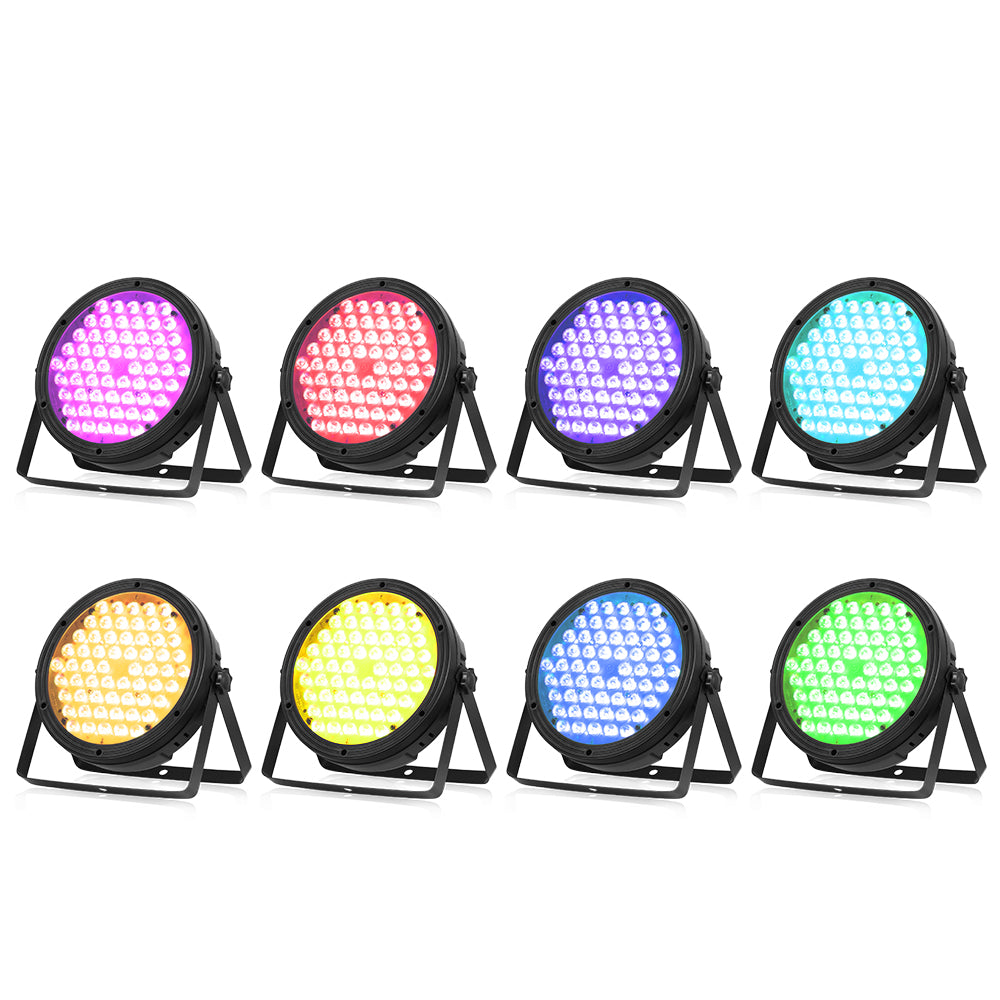
A fixture like the Betopper 18x18W RGBW Amber UV 6-in-1 LED PAR Light is well-suited for wedding uplighting.

With RGBW + amber + UV mixing, it allows you to create warmer, more natural tones—something especially important for wedding environments where soft whites and ambers are preferred over saturated colors.

2. Moving Heads: Energy and Transitions

If uplighting defines the room, moving heads define the experience.

Weddings are built around transitions—entrance, first dance, open dance floor—and lighting needs to support those changes. Static lighting alone cannot create that shift.

What to Look For

  • Beam or hybrid (beam/spot/wash)
    Beam effects create visible aerial movement; hybrid fixtures add flexibility.
  • Gobos and prism effects
    Useful for both slow moments and high-energy dancing.
  • Sound-active or DMX control
    Allows flexible operation depending on your setup.

How Many Do You Need?

Two fixtures is the ideal starting point.

This allows:

  • symmetrical placement
  • balanced movement
  • full dance floor coverage without overcomplication

3. High CRI COB Blinder Lights: The Missing Piece

This is the part many DJs overlook—but it makes a major difference.

Blinder lights are used to illuminate people, not just the space. During key moments—first dance, speeches, crowd interaction—they ensure that guests are visible, not just surrounded by effects.

Why High CRI Matters

CRI (Color Rendering Index) determines how natural people look under light.

  • Low CRI → washed-out or unnatural skin tones
  • High CRI → accurate, warm, camera-friendly lighting

For weddings—where photos and video matter—this is critical.

What to Look For

  • High CRI COB LED (90+)
    Ensures natural skin tones
  • Warm white output (3000K–4000K)
    Matches wedding aesthetics
  • Wide beam spread
    Covers people evenly without harsh shadows

How Many Do You Need?

Two units is enough for most setups:

  • front-of-booth positioning
  • or angled toward dance floor / couple

They can be used subtly during dinner and more actively during key moments.

Final Thoughts

The most cost-effective wedding lighting setup isn’t the cheapest one—it’s the one that works every time, sets up quickly, and helps you earn more per event.

With a simple 8-fixture system built around uplighting, moving heads, and high-CRI front lighting, you can cover the full wedding timeline—from elegant dinner ambiance to high-energy dance floor moments—without overcomplicating your setup.

More importantly, this kind of system is scalable. You can start small, expand as your bookings grow, and turn lighting into a reliable revenue stream instead of an occasional add-on.

Explore more DJ-focused lighting solutions here:
👉 https://betopperdj.com/

Leave a comment

This site is protected by hCaptcha and the hCaptcha Privacy Policy and Terms of Service apply.

Reading next

Wedding Lighting Setup for DJs: How to Save 30% Without Losing Impact