
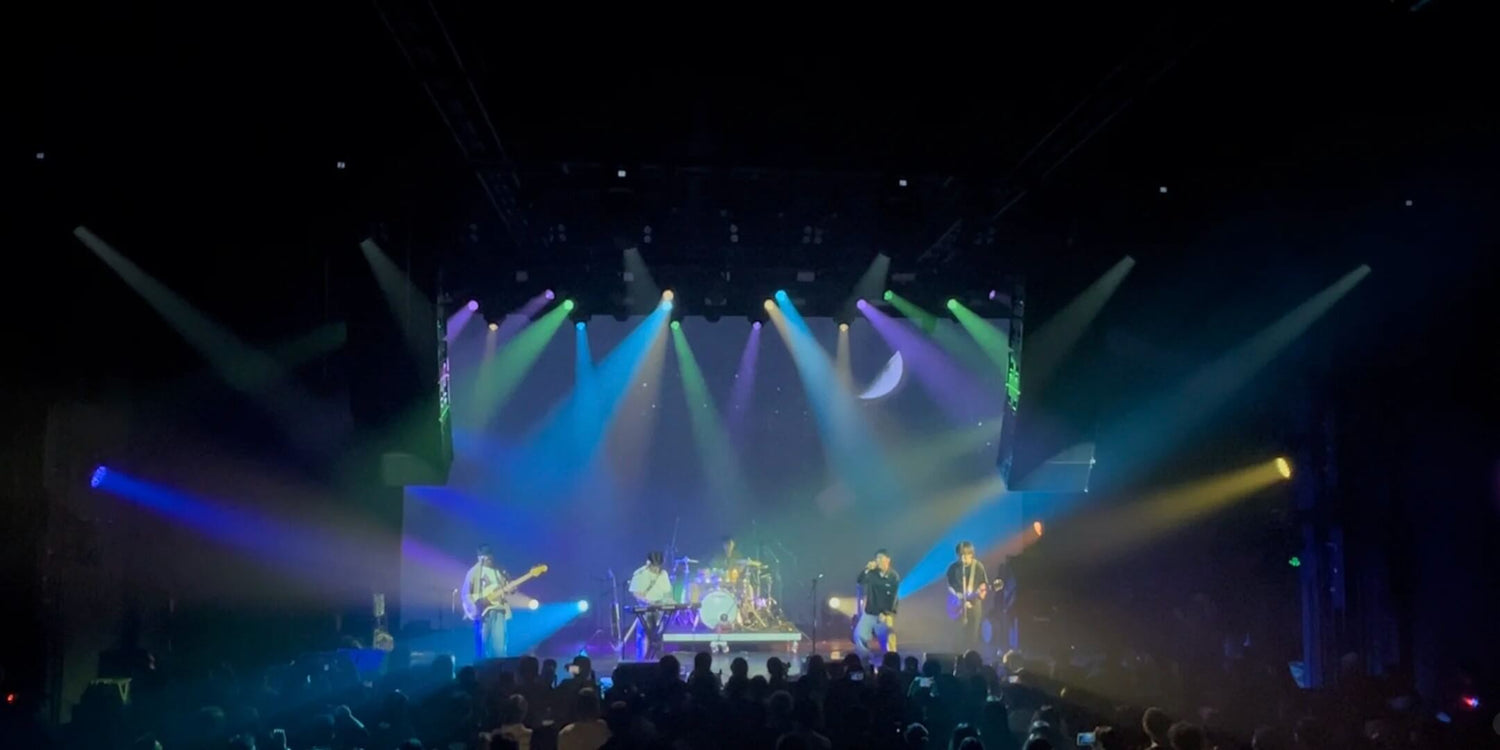
A Practical, Real-World Guide for DJs, Stages & Events
When selecting PAR lights, technical specifications are often the first reference point.
Wattage provides an indication of potential brightness.
LED count affects distribution and efficiency.
Price defines the practical scope of a system.
These parameters are important and should never be ignored.
However, in real-world environments—such as live stages, event spaces, clubs, and theatrical setups—fixtures with similar power ratings can produce very different visual results once deployed.
That difference is determined by one critical factor:
The color system.
This guide is designed to help you choose the right PAR light with confidence.
Rather than focusing on raw specifications, it explains how different PAR light color systems perform in practice, what each type does best, and which applications they’re truly suited for—so you can make a purchase that matches your setup, not just the spec sheet.
Why Two PAR Lights with Similar Power Look Completely Different
You may have experienced this:
- Two PAR lights, both around 100–150W
- Same venue, same position
- One looks rich and smooth
- The other looks flat, gray, or “cheap”
This happens because power only controls brightness, not color quality.
What defines visual quality is:
- How white is created
- How warm tones are produced
- How colors blend during fades
- How skin reacts under the light
- How cameras interpret the spectrum
That’s where RGB, RGBW, 6-in-1, and High CRI start to behave very differently.
RGB PAR Lights: Why They’re Cheap — and Why They Look Cheap
RGB PAR lights use only Red, Green, and Blue to mix colors.
Where RGB works well
- Background washes
- Ambient color fills
- Entry-level DJ setups
- Situations where people are not the focus
Where RGB fails
- White light (often gray or blue-tinted)
- Skin tones (faces look dull or unnatural)
- Smooth fades (colors “step” instead of blend)
This is not a manufacturing issue — it’s a physics limitation.
RGB systems simply don’t contain enough spectrum to reproduce natural light.
That’s why RGB PAR lights are best treated as utility lights, not presentation lights.
Example (Entry-level RGB PAR):
Betopper LPC017 54x3W RGB 3-in-1 Stage LED PAR Light
This model delivers bright, vivid color washes, great for parties, background fill, events, and setups where powerful full-color lighting is a priority without overcomplicated control.
 This type of fixture is perfect when:
- Budget matters
- Setup speed matters
- Visual realism does not
RGBW PAR Lights: The First “Professional” Step
RGBW adds a dedicated white LED.
This single change solves several real-world problems at once.
What improves immediately
- White light becomes actually white
- Pastel colors stop looking muddy
- Brightness feels more usable
- Camera exposure becomes easier
RGBW is why many venues say:
“Our lighting suddenly looks cleaner.”
What RGBW still cannot do
- Truly natural warm skin tones
- High-end color blending for theatrical work
- Accurate color rendering for close-up faces
RGBW is a balanced, practical choice, especially when you need:
- Reliable wash lighting
- Mixed usage (events + stage + background)
- Good results without complexity
Example (RGBW High-CRI wash):
Betopper LPC010N 54x4w High CRI PAR Light
 This type of light is often the workhorse of professional rigs.
6-in-1 PAR Lights: Why DJs and Clubs Prefer Them
6-in-1 systems usually add Amber, Lime, and UV on top of RGB.
Each color solves a specific limitation:
Amber
- Fixes harsh reds
- Makes warm tones look intentional, not artificial
Lime
- Cleans up whites
- Improves color balance across the spectrum
-
Reduces “color gaps” during fades
UV
- Makes whites and neon materials glow
- Adds energy and depth in clubs and parties
The result
- Colors feel deeper, richer, smoother
- Transitions look cinematic instead of mechanical
- Atmosphere feels intentional
This is why 6-in-1 PAR lights dominate:
- DJ booths
- Dance floors
- Clubs and bars
- Creative stage looks
Examples (6-in-1 PAR Lights):
Betopper LPC1218 12x18W Lime Amber UV + RGB 6-in-1 LED PAR Light
Betopper LPC1818 Upgraded 18x18W Lime Amber UV + RGB LED PAR Light
 6-in-1 is not about accuracy — it’s about impact.
High CRI PAR Lights: Why “People Lighting” Is a Different World
If your lighting touches faces, everything changes.
What High CRI actually means
High CRI (>90) means the light contains balanced spectral information, allowing:
- Skin to look healthy
- Fabrics to keep correct color
- Cameras to capture natural tones
Where non-High-CRI lights fail
- Faces look gray or lifeless
- Makeup shifts color
- Cameras exaggerate color flaws
That’s why High CRI is essential for:
- Weddings
- Theater
- Stage front lighting
- Photography & video
Examples (High CRI PAR Lights):
Betopper LPC010N 54x4w High CRI PAR Light
Betopper LPC010-B 54x4w 5562lm PAR Light with Barndoor
 These lights are not flashy —
they’re trustworthy.
Final Takeaway: Choose by Result, Not by Specs
Ask yourself:
- Do I need impact or accuracy?
- Am I lighting spaces or people?
- Is this for energy or realism?
When you answer those questions, the right PAR light becomes obvious.
👉 To see real-world PAR light options built for each of these purposes, explore the BETOPPER lineup at:
https://betopperdj.com/

Dejar un comentario
Todos los comentarios se revisan antes de su publicación.
Este sitio está protegido por hCaptcha y se aplican la Política de privacidad de hCaptcha y los Términos del servicio.