
Introduction
Is your worship service being held back by subpar production? Whether it’s distracting flicker on your livestream, constant fan noise during the sermon, or skin tones that look washed out on camera, poor lighting can quickly become a barrier to engagement rather than a tool for connection.
If you are a volunteer tech lead or a ministry director, you know the pressure of making sure the Sunday service runs smoothly. You aren't alone—most houses of worship struggle with the same five technical hurdles. In this guide, we move past the jargon to provide actionable, practical strategies to solve your biggest lighting headaches. From optimizing CRI/TLCI levels for broadcast quality to simplifying your control systems for volunteer teams, here is how you can improve your sanctuary lighting to support a more immersive worship environment.

Chapter 1: The Fundamentals of Church Lighting — Key Characteristics and Color Science
In a church environment, lighting serves a very different purpose than it does in concerts or theatrical productions. The goal is not to create spectacle, but to support visibility, guide attention, and reinforce the atmosphere of worship.
Effective church lighting design considers three key factors at the same time: the architecture of the sanctuary, the visual comfort of the congregation, and the needs of modern livestream cameras. When these elements are balanced correctly, lighting quietly enhances the service without distracting from the message.
Understanding these fundamentals is the first step toward building a lighting system that works well both for the congregation in the room and for viewers watching online.
1. Key Characteristics of Church Lighting
Layered Lighting
Professional church lighting typically follows a layered lighting approach, where illumination is divided into three functional levels.
- Ambient Lighting
Provides overall visibility within the sanctuary so the congregation can comfortably see their surroundings. - Key Lighting
Illuminates the pulpit, pastor, and worship team. This layer is the most important for both in-room visibility and livestream video. - Architectural Lighting
Highlights walls, ceilings, and architectural features to create depth and visual balance within the space.
When these three layers work together, the stage no longer appears flat. Instead, lighting naturally guides the congregation’s focus toward the speaker and the message.
Glare Control
Church services often involve long periods of focused attention. Because of this, visual comfort is essential.
Direct exposure to bright light sources can quickly cause eye fatigue for the congregation. Professional lighting systems therefore prioritize glare control using accessories such as:
- honeycomb grids
- barn doors
- controlled beam optics
These tools shape and direct the light while preventing the fixture’s source from shining directly into the audience’s line of sight.
Controlled Beam Coverage
Sanctuaries often feature high ceilings and deep platforms, which makes beam control especially important.
The objective is not simply to use narrow beams, but to achieve controlled and even coverage across the speaking area. Proper beam control ensures that pastors and worship leaders are clearly illuminated while minimizing unwanted light spill on walls or ceilings.
When beam distribution is well controlled, the result is a cleaner visual image both in the room and on camera.
2. The Color Science of Church Lighting
In church environments, color is not about spectacle. Instead, it is about creating the right emotional tone while maintaining accurate skin-tone reproduction for both the congregation and livestream viewers.
Color Temperature in Worship Spaces
Most churches operate within a color temperature range of 3200K to 4000K.
This range offers a balance between warmth and clarity, making it suitable for both human perception and camera sensors.
- Around 3200K creates a warm, intimate atmosphere often associated with traditional worship settings.
- 3500K–4000K provides slightly brighter, clearer illumination that can improve visibility for livestream production.
Maintaining consistent color temperature across fixtures is essential for creating a unified visual environment.
CRI and TLCI — Accurate Color Reproduction
Two technical metrics are particularly important in church lighting systems.
- CRI (Color Rendering Index)
A CRI of 90 or higher ensures that materials such as wood, fabrics, and architectural details appear natural and vibrant rather than dull or washed out. - TLCI (Television Lighting Consistency Index)
For churches that livestream services, TLCI becomes even more critical. Fixtures with high TLCI ratings allow cameras to reproduce skin tones accurately, preventing the unnatural green or pale appearance often caused by low-quality LED sources.
The Principle of Color Restraint
Professional church lighting typically follows a principle of restraint.
Even when using RGBW or RGBA fixtures, the goal is not to create intense stage effects, but to introduce subtle color environments that support the mood of the service.
Soft tones such as deep amber, muted blue, or desaturated teal can add depth to the stage while maintaining a calm and respectful atmosphere.
When color is used thoughtfully, lighting enhances the worship experience without drawing attention to itself.
Chapter 2: Five Common Church Lighting Problems — and How to Solve Them
Understanding the fundamentals of church lighting is only the first step. In real-world worship environments, even well-equipped churches often encounter practical challenges once lighting systems are installed and used week after week.
Many of these issues do not stem from a lack of equipment, but from small design oversights or misunderstandings about how lighting behaves in a sanctuary environment—especially when livestream cameras, architectural acoustics, and volunteer-operated systems are involved.
The following are five of the most common lighting challenges churches face during Sunday services, along with practical strategies to resolve them.
Problem 1: Pastor Looks Unnatural on Livestream
Many churches only notice this issue after they begin livestreaming their services. Inside the sanctuary, the pastor may look perfectly natural. But on YouTube or Facebook, skin tones can appear pale, greenish, or washed out.
In most cases, the issue is not the camera but the lighting itself. Low-quality LED fixtures often lack the spectral balance required to reproduce natural skin tones, especially on camera. When background lighting is brighter than the key lighting on the speaker, the camera may also adjust exposure in ways that further distort facial color.
Improving skin tone on camera usually begins with strengthening the front lighting system.
A few practical guidelines include:
- Use lighting fixtures with CRI ratings above 90
- Maintain consistent color temperature across the stage
- Ensure that speakers remain the brightest subjects in the frame
These adjustments allow cameras to capture faces naturally while maintaining a balanced stage image.
In many church lighting upgrades, teams begin by improving illumination on the pulpit and speaking area using high-CRI PAR fixtures. These lights provide consistent coverage and accurate color reproduction for both the congregation and livestream viewers.
For example, fixtures such as the Betopper LPC010-B High CRI PAR Light are often used in smaller church installations because they provide even illumination and include barn doors for beam control, helping keep light focused on the speaker rather than spilling into the congregation.

Problem 2: Lights Flicker or Behave Unpredictably
Another issue that frequently appears in church lighting systems is unexpected flickering or inconsistent fixture behavior. During a service, lights may suddenly change brightness, shift color without command, or briefly lose response to the lighting controller.
In many cases, the problem is not the fixtures themselves but the control signal being sent to them. Because microphone cables and DMX cables look very similar, some churches unknowingly connect lighting systems using standard audio cables. However, DMX signals require a specific cable impedance, and using the wrong type of cable can cause unstable communication between fixtures.
Long signal chains without proper termination can also lead to signal reflections, which may cause lights to behave unpredictably.
To stabilize the lighting control system, churches should ensure that the DMX network is properly configured.
A few practical guidelines include:
- Use dedicated DMX cables instead of microphone cables
- Keep the DMX signal chain organized and as short as possible
- Install a DMX terminator at the end of the lighting chain
These adjustments help ensure reliable communication between the lighting controller and fixtures.
Problem 3: The Lighting Feels Too “Concert-Like”
After upgrading their lighting systems, some churches receive unexpected feedback from the congregation: the stage lighting feels too theatrical or distracting.
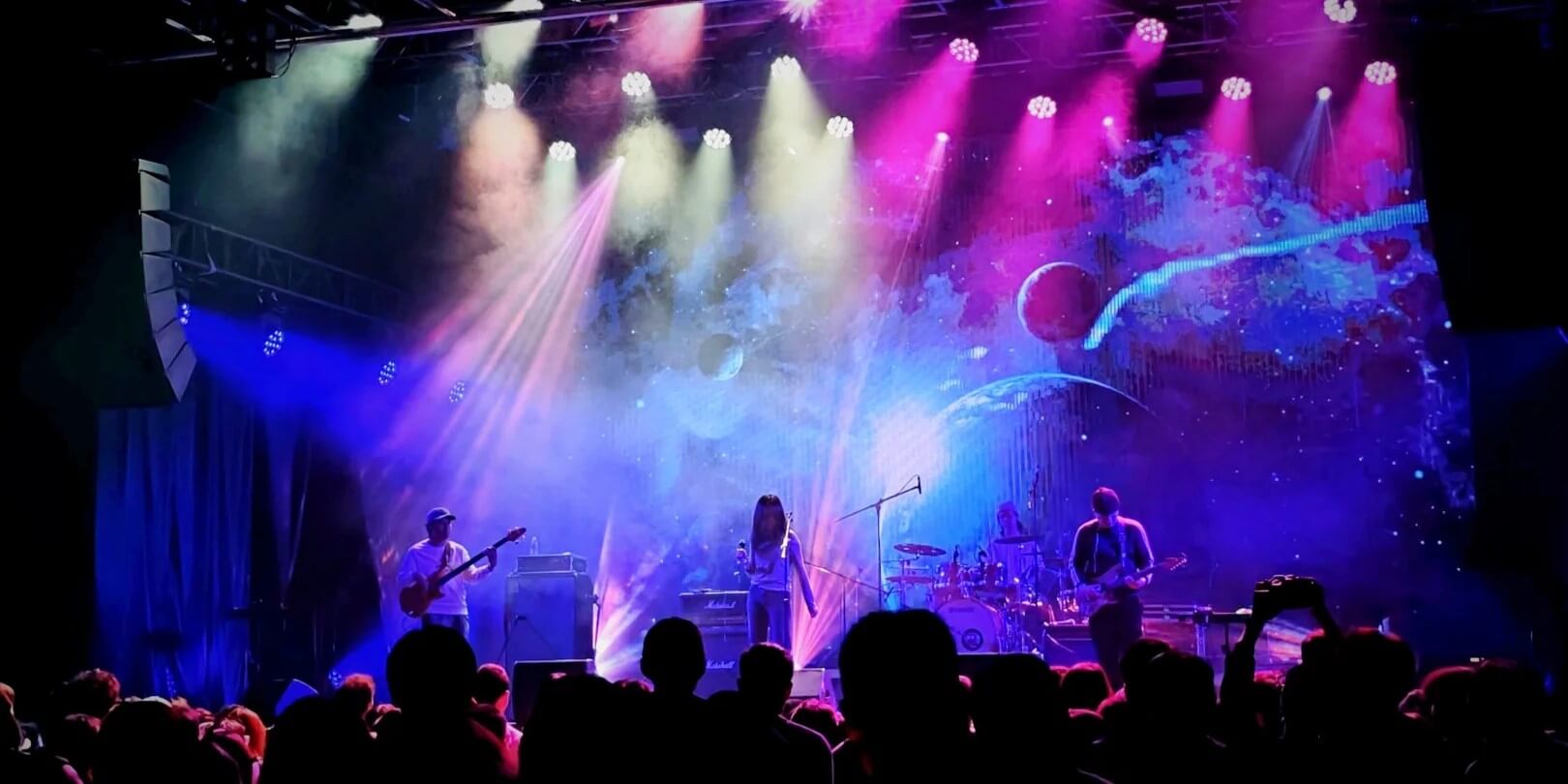
Instead of supporting the worship environment, the lighting may resemble a concert or nightclub atmosphere. Colors appear overly saturated, and rapid color changes can draw attention away from the message.
This usually happens when RGB lighting fixtures are used at full saturation or when dynamic lighting effects are applied throughout the entire service. While these effects may work well for concerts, they can feel overwhelming in a worship setting where the goal is focus and reflection.
Church lighting typically works best when it follows a restrained color approach.
A few practical guidelines include:
- Keep front lighting neutral and natural for speakers
- Use soft background colors to create visual depth
- Limit color transitions during sermons or prayer moments
This allows lighting to enhance the atmosphere of worship without becoming the center of attention.
Compact moving wash fixtures, such as the Betopper LM1915R 19×15W RGBW moving head, are often used in this role. With adjustable zoom and smooth RGBW color mixing, fixtures of this type allow worship teams to create gentle background lighting during music segments while maintaining a calm and balanced visual environment for the rest of the service.

Problem 4: “Quiet” Lights Are Still Too Noisy
Some churches upgrade their lighting systems expecting a quieter environment, only to discover that certain fixtures produce noticeable fan noise during sermons or prayer moments.
In worship spaces, this issue becomes more apparent than in other venues. Sanctuaries often have high ceilings, reflective walls, and a generally quiet atmosphere. Sounds that might go unnoticed in a concert environment can become surprisingly audible during a sermon.
Many fixtures advertised as “low noise” are tested in open environments. In a sanctuary, however, the combination of reflective architecture and sensitive microphones can amplify mechanical noise from cooling fans or moving components.
Reducing lighting noise requires both careful fixture selection and thoughtful placement.
A few practical approaches include:
- Use lighting fixtures designed with efficient LED cooling systems
- Position fixtures further away from podium microphones when possible
- Reserve moving lights for stage atmosphere rather than speaker illumination
In many church lighting setups, quieter fixtures are placed closer to the speaking area, while moving lights used for stage color or worship music are positioned farther from microphones.
This layout allows churches to maintain visual depth and dynamic lighting during worship without introducing unwanted mechanical noise during preaching or prayer.
Problem 5: The Lighting System Is Too Complex for Volunteers
Many churches rely on volunteer teams to run their technical systems during Sunday services. While modern lighting fixtures can offer powerful features, they can also introduce unnecessary complexity.
In some churches, volunteers feel uncomfortable operating the lighting system. Lighting scenes may require multiple manual adjustments, or the control interface may feel difficult to learn for new team members.
As a result, lighting may remain static throughout the service, or volunteers may avoid using certain fixtures altogether. In some cases, churches invest in advanced lighting equipment that ends up being used far below its full capability simply because the system is too complicated to manage during a live service.
The key to a successful church lighting system is simplicity and consistency.
Practical steps include:
- Create preset lighting scenes for different parts of the service
- Limit the number of manual adjustments required during the service
- Design lighting layouts that are intuitive for volunteer operators
By simplifying the workflow, churches can ensure that lighting supports the service without adding pressure to volunteer teams.
Many churches simplify their lighting operation by programming a small number of lighting scenes, such as sermon lighting, worship lighting, and transition lighting. Volunteers can then switch between these presets during the service instead of adjusting individual fixtures.
Fixtures with reliable DMX control and consistent performance can make this process easier for volunteer teams, allowing them to focus on supporting the service rather than managing complex technical operations.
FAQ: Church Lighting
1. What is the best lighting for churches?
The best church lighting balances clarity, comfort, and atmosphere. Most worship spaces benefit from a combination of front lighting for the speaker, background lighting for visual depth, and subtle color lighting for worship music segments.
High-CRI LED fixtures are commonly recommended because they reproduce natural skin tones and architectural colors more accurately, which is especially important for churches that livestream their services.
2. What color temperature is best for church lighting?
Most churches use a color temperature between 3200K and 4000K.
Warmer temperatures around 3200K create a welcoming and intimate atmosphere, while slightly cooler temperatures closer to 4000K can improve clarity for livestream cameras. The key is maintaining a consistent color temperature across the stage.
3. How bright should church stage lighting be?
Church lighting does not need to be extremely bright, but the speaker should always be the brightest subject on stage.
For most sanctuaries, the pulpit area should be clearly illuminated while background lighting remains slightly dimmer to create visual depth. Balanced lighting helps both the congregation and livestream viewers focus on the message.
4. Why does church lighting flicker on camera?
Lighting flicker is usually caused by incompatible dimming systems or unstable control signals. In some cases, using microphone cables instead of proper DMX cables can also create signal instability.
Ensuring proper DMX wiring and using fixtures designed for video environments can significantly reduce flicker.
5. Do churches need moving lights?
Moving lights are not required for every church, but they can be helpful for creating stage atmosphere during worship music.
Many churches use static lighting for the pulpit and speaking areas while adding moving wash or beam lights for musical segments. This allows the lighting system to support both the message and the worship experience.
Conclusion
Church lighting doesn’t have to be complicated to be effective. By focusing on clear front lighting, balanced color, stable control systems, and simple workflows for volunteer teams, churches can dramatically improve both the in-room experience and their livestream quality.
If you are planning to upgrade your church lighting setup, you can explore practical lighting solutions and guides at:
https://betopperdj.com/


Dejar un comentario
Todos los comentarios se revisan antes de su publicación.
Este sitio está protegido por hCaptcha y se aplican la Política de privacidad de hCaptcha y los Términos del servicio.